How do pets affect your heating and cooling?
In three main ways. First, hair and dander. A shedding dog or two cats can load a filter much faster than people alone, and a clogged filter cuts airflow. Second, the outdoor unit. Dogs pee on it, dig next to it and sometimes chew on the wiring and line insulation. Third, the animals themselves. A dog or cat shut in a house with a dead AC on a 105°F afternoon is in real trouble.
Most of this is easy to manage once you know what to watch. Start with the filter.
Filters in a home with pets
The filter is where pet hair ends up. Once it's matted over, the blower has to pull harder, the vents get weak, and in summer the AC coil can ice up. In winter, a starved furnace can overheat and cycle off on its safety switch. Those are two of the most common service calls, and a dirty filter is often behind them. See AC frozen and furnace short cycling if you're already seeing either.
- Check the filter every month. Hold it up to a light. If you can barely see through it, replace it.
- Plan on changing it more often than the package says, especially in spring and fall shedding seasons.
- Use a pleated filter rather than the thin fiberglass kind. Pleated filters hold more hair and catch dander.
- If you want a higher MERV for dander allergies, watch for weaker airflow after the switch.
- Write the filter size on the furnace door with a marker so you never guess at the store.
The EPA's guidance on home air cleaning suggests MERV 13, or the highest rating your system can take, when you upgrade a filter (EPA guide to air cleaners). In a house with heavy shedders, that higher-rated filter fills fast, so check it more often. The furnace filter guide covers sizes and MERV in more depth.
The return grille and the blower
Pet hair collects on the return grille before it ever reaches the filter. If the grille is in a hallway floor or low on a wall, it can mat over in a week. Vacuum it when you vacuum the floors.
Some homes have the filter right behind that grille. Others have it at the furnace or air handler, in a garage, closet or attic. If yours is at the furnace and the grille has no filter, hair can travel through the return duct and collect on the blower wheel. A dirty blower wheel moves less air and can throw the motor off balance. That's a technician cleaning job, not a homeowner one, but it's worth asking for during a maintenance visit.
Keep litter boxes and pet beds away from return grilles. The return pulls litter dust and loose fur straight into the system.
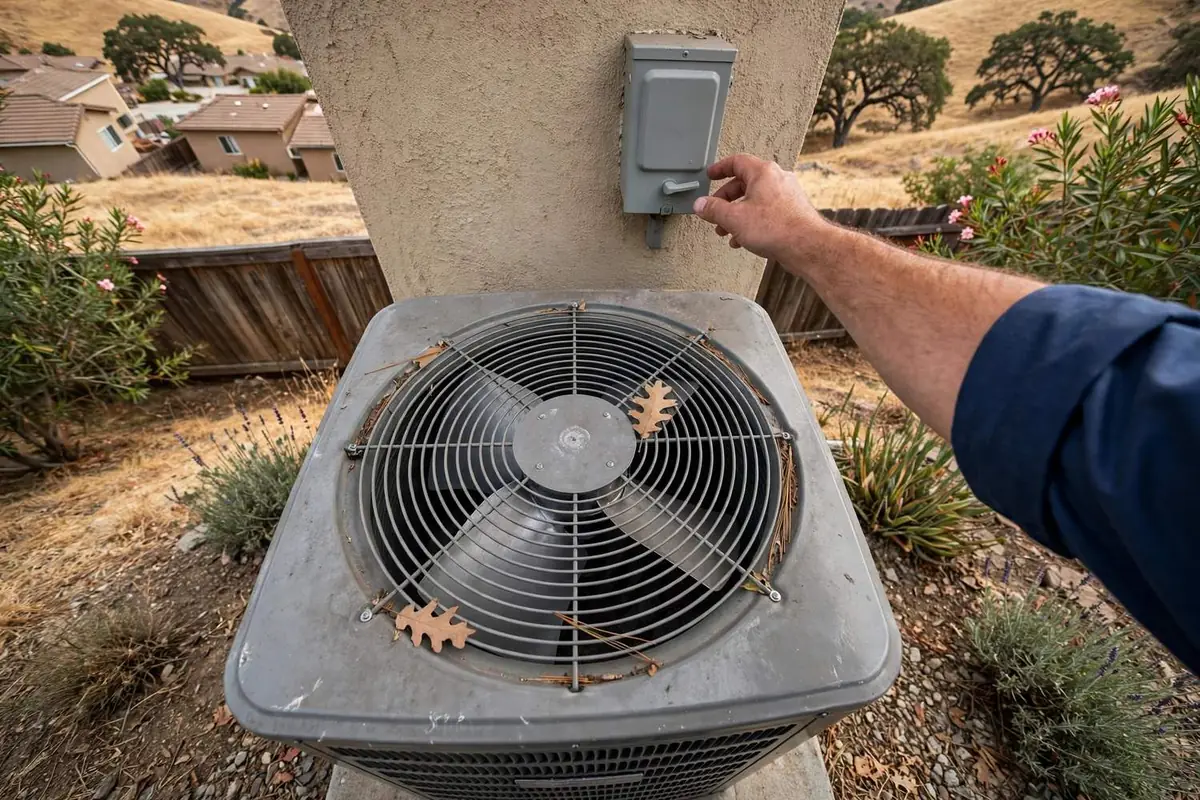
Protecting the outdoor unit from pets
The outdoor condenser or heat pump is a favorite spot for male dogs. Urine is corrosive, and many HVAC technicians warn that repeated soaking can eat at the thin aluminum fins and the copper coil, which can lead to leaks over time. A coil leak on an older AC can turn a minor problem into a replacement conversation. See signs of a refrigerant leak.
Ways to protect it:
- A short fence or barrier around the unit, with enough open space on all sides for air to flow. Check the clearances in the installation manual for your model. Too tight a fence recirculates hot air and hurts cooling.
- Train the dog to a different spot in the yard. It takes patience but it works.
- Rinse the unit with a garden hose (power off at the disconnect first) if you know it's been soaked. Gentle water only, no pressure washer.
- Keep the area clear of dog toys, bedding and droppings.
Hair is the other outdoor issue. Pet fur, dry grass and dust pack the fins of many Solano County condensers, especially inland, where fields and open space surround neighborhoods in Vacaville and Dixon. A clogged coil makes the AC work harder at the worst possible time. Outside AC unit not running covers what to check if it stops altogether.
Chewing, digging and curious cats
Puppies and some adult dogs chew on the foam insulation around the refrigerant lines and the electrical whip that runs to the outdoor unit. Chewed insulation wastes cooling. A chewed electrical line is dangerous for the dog and the equipment. If you see damage to the wiring, keep the pet away, turn the system off and call for a repair. Don't patch it yourself.
Digging dogs can undermine the pad under the outdoor unit. If the unit is tilting, have it leveled. Inside, cats are fond of warm furnace closets and open attic hatches. Keep the furnace closet door shut, and never let a pet into the attic or crawlspace, where they can crush flex duct or get stuck. Small toys and kibble dropped through floor registers end up in the ducts, so a register cover with fine mesh can help in a pet-heavy house.
Pets and a broken AC in a Solano heat wave
This is the part that matters most. Inland Solano County gets real heat. NOAA normals put downtown Vacaville at a July average high of 97.3°F, with about 28 days a year at 100°F or hotter. Fairfield averages about 11 such days. During the September 2022 heat wave, NOAA stations in Fairfield and Vacaville recorded highs around 114 to 115°F.
Dogs and cats cool themselves mostly by panting, which works poorly in a hot, closed house. Short-nosed breeds, older pets and heavy-coated dogs struggle sooner. If your AC quits while you're at work, the house can heat up fast.
| Situation | What to do |
|---|---|
| AC stops working on a hot day | Move pets to the coolest room, usually downstairs and on the shady side. Give fresh water and fans. Call for repair. |
| Heat wave forecast | Check the AC before it hits. Replace the filter, clear the outdoor unit. Line up a backup place for pets. |
| You're away all day | Ask a neighbor to check in. A smart thermostat with alerts can warn you if indoor temperature climbs. |
| Power outage or shutoff | Plan where pets go. Solano County saw large PG&E safety shutoffs in October 2019. |
If a pet shows signs of heat stress, like heavy panting, drooling, weakness or vomiting, call your vet right away. The heat-wave AC plan and power outages and your HVAC have more on preparing. For an AC that dies at the worst moment, see emergency HVAC.
Cold weather, heaters and pets
Solano winters are mild, but they're not warm. Vacaville averages a January low of 39.6°F and Fairfield 40.4°F, and the inland stations see some frost nights each year. Most pets do fine indoors if the furnace is working.
The risk comes when the furnace is out and space heaters come out. Pets knock them over and lie too close to them. Use only heaters with tip-over shutoff, keep them on a hard, level floor, and never leave a pet alone with one running. Space heater safety while the furnace is down covers this in detail.
Older homes in Vallejo and Benicia sometimes have floor furnaces or wall furnaces with hot grilles. Pets lying on or against those can get burned. Keep pet beds well away from them. Wall furnace repair or replace has more on those units.
Gas, carbon monoxide and your pets
Carbon monoxide affects animals too, and smaller pets can show symptoms before people do. But don't treat a pet as your alarm. California requires CO alarms in homes with gas appliances, a fireplace or an attached garage (Health and Safety Code 17926), and about 6 in 10 Solano County homes heat with natural gas, according to Census data. CO alarms in California explains placement.
If a CO alarm sounds or you smell gas, get everyone out, pets included. Then call 9-1-1 and PG&E at 1-800-743-5000 from outside. Don't go back in for anything.
Thermostat settings when you're away
It's tempting to shut the AC off when you leave for the day. If pets are home, don't. Set a moderate temperature instead, warmer than you'd keep it for yourself but well below what the house would reach with the AC off. In summer, closing blinds on west and south windows helps the AC keep up through the afternoon.
Pets also bump or chew thermostats on low walls and step on smart thermostat screens. If your thermostat keeps changing settings on its own, look for a lock feature. If it goes blank, thermostat blank walks through the checks.
When the technician visits
Put pets in a closed room or a crate before the technician arrives, and keep them there until the visit is done. Doors will be open, tools will be on the floor, and the tech may need to work in the side yard where the dog usually lives. Tell the company when you call if you have a dog that's protective or anxious. They'll appreciate it.
If you'd like the system checked for pet-related wear, like a dirty blower, a matted coil or chewed line insulation, call (707) 418-4772. The line connects you with participating local HVAC companies in Fairfield, Vacaville, Suisun City, Benicia, Dixon and Vallejo.
Sources
- NOAA NCEI, U.S. Climate Normals 1991–2020 (station files for Vacaville, Nut Tree Airport, Fairfield, Vallejo)
- NOAA NCEI, Global Historical Climatology Network daily records
- U.S. Census Bureau, American Community Survey 2020–2024 5-year (tables B25003, B25035, B25040), via Census Reporter
Last reviewed 2026-11-12 by the RD Heat & Air editorial team. Editorial policy.