Is it OK to use a space heater while you wait for the repair?
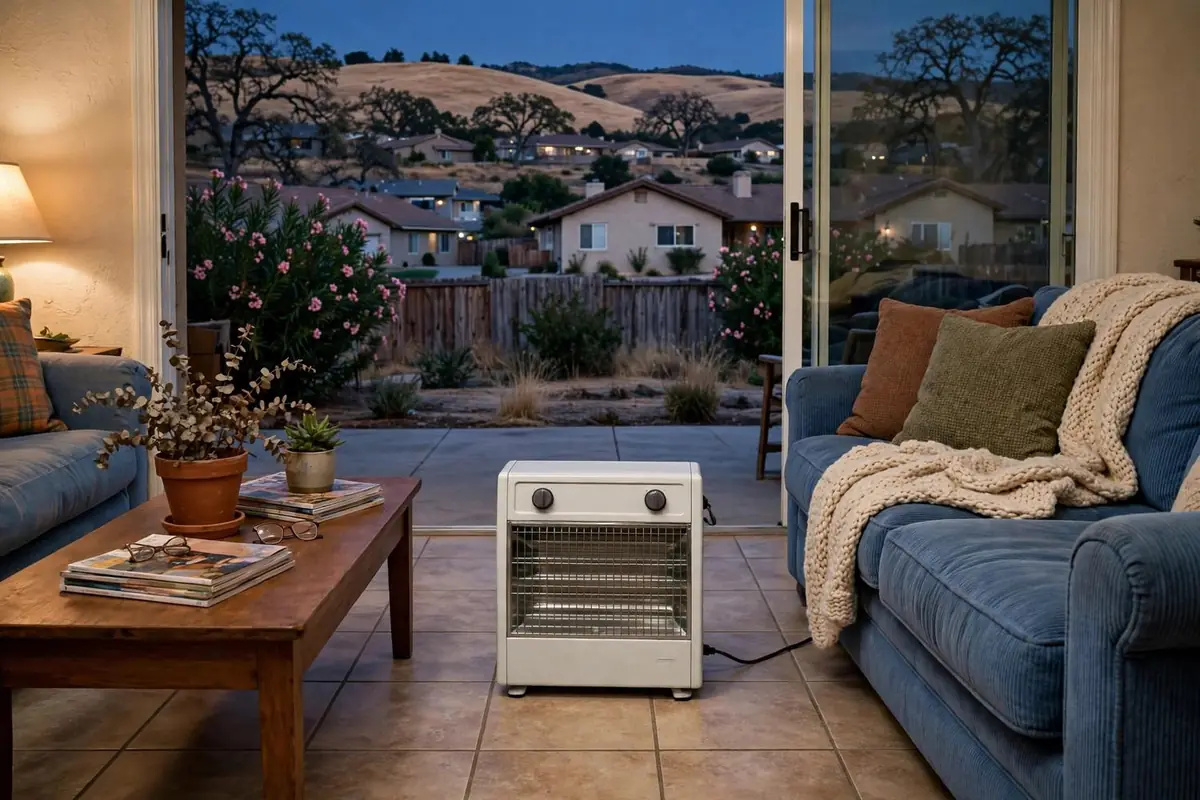
Yes, with care. Solano County's winters are mild. January lows average around 40°F in Fairfield and Vacaville and about 42°F in Vallejo, and freezing nights are uncommon (NOAA 1991 to 2020 normals). Most homes won't get dangerously cold overnight, so one or two electric heaters in the rooms you're using can bridge a day or two without trouble.
The risk isn't the cold. It's the heater. Fire safety agencies repeat the same handful of rules every winter because the same mistakes keep happening: heaters too close to bedding or curtains, heaters on extension cords, and fuel-burning devices used indoors. Follow the rules below and a space heater is a fine short-term plan.
Then get the furnace looked at. A space heater is a bridge, not a fix.
Which kind of space heater is safest?
| Heater type | Good points | Drawbacks |
|---|---|---|
| Oil-filled radiator (electric) | No exposed glowing element; gentle, steady heat; quiet | Slow to warm up; the surface still gets hot |
| Ceramic fan heater (electric) | Heats a small room fast; usually light and compact | Fan blows warm air at nearby fabric; easy to tip |
| Infrared or quartz (electric) | Warms people and objects in front of it quickly | Exposed hot element; keep well away from anything that can burn |
| Propane, kerosene or other fuel-burning heaters | Work without power | Produce carbon monoxide; models not made for indoor use should never come inside |
For a furnace outage, an electric oil-filled radiator or a ceramic heater with safety features is the sensible pick. Look for these on the box:
- A tip-over switch that shuts it off if it falls.
- Overheat protection.
- A certification mark from a recognized testing lab, such as UL, ETL or CSA.
- A thermostat, so it cycles instead of running full blast all night.
Space heater safety rules that actually matter
- Keep at least 3 feet of clear space on all sides. That means beds, sofas, curtains, clothes, paper and pets.
- Plug it directly into a wall outlet. No extension cords, no power strips.
- Set it on a hard, flat floor. Not on a rug, a bed or a table.
- Turn it off when you leave the room or go to sleep.
- Keep kids and pets out of that 3-foot circle, and watch toddlers closely.
- Check the cord and plug before each use. Cracked, frayed or scorched means it's done.
- Don't run it in a bathroom or near water unless the maker says it's rated for that.
- Test your smoke alarms. If your heater is the only heat source, your alarms matter more than usual.
These rules come straight from federal fire safety guidance, including the U.S. Fire Administration portable heater flyer on Ready.gov. They're simple. People skip them anyway, usually at 2 a.m. when they're cold and tired.

Why outlets, cords and breakers matter
A plug-in space heater on high draws a lot of power, close to what a standard household circuit is built to carry. That's why extension cords and power strips are off-limits: thin cords heat up under that load, and power strips aren't made for it.
A few practical tips:
- Run one heater per circuit. Two heaters in bedrooms that share a circuit will likely trip the breaker.
- Don't share the outlet with a hair dryer, microwave or other high-draw appliance.
- Feel the plug after the heater has run for a while. If it's hot to the touch, unplug it and use a different outlet. A hot plug can mean a worn outlet.
- If the breaker trips, don't just keep resetting it. Move the heater to a different circuit.
Older homes need extra care. The median home in Vallejo was built in 1975 and in Benicia in 1981 (U.S. Census ACS 2020 to 2024). Wiring and outlets from that era can be fine, but they've also had decades of wear. If outlets look loose or discolored, don't run a heater on them.
Never use these to heat your home
These aren't judgment calls. Every one of them can kill:
- A gas oven or stovetop. The Consumer Product Safety Commission warns against using them to heat a home because of carbon monoxide risk.
- A charcoal or gas grill, indoors or in the garage.
- A camp stove or propane heater made for outdoor use.
- A portable generator inside the house, in the garage or near windows and doors. Even with the garage door open.
Carbon monoxide has no smell. If you use any fuel-burning device during an outage, make sure you have working CO alarms. The CO alarm guide covers California's rules and placement. During a PG&E power shutoff, a space heater won't help at all, and the power outages guide has a better plan.
Staying warm without heating the whole house
You don't need to heat every room. Pick one or two rooms where everyone spends the evening and sleeps, and make those comfortable.
- Close doors to rooms you aren't using.
- Close curtains and blinds at sunset to hold the day's warmth.
- Put a towel at the bottom of drafty doors.
- Use extra blankets and warm layers at night instead of running a heater while you sleep.
- Run the heater in the bedroom before bed, then switch it off.
In much of Solano County, a closed-up house loses heat slowly on a typical winter night. You might wake to a cool house, not a frigid one. That's uncomfortable, but it's safe.

What about your PG&E bill?
Electric resistance heat is simple and almost every watt turns into heat, but it's an expensive way to heat compared with a working gas furnace or heat pump. One heater in one room for a few days won't wreck your bill. A week of several heaters on high in a drafty house can add up fast.
Many Solano customers are on PG&E time-of-use rates, where electricity costs more in late afternoon and evening, which is exactly when you'll want heat. Fairfield, Benicia and Vallejo customers get power generation from MCE by default, with PG&E still delivering it, so check your own rate plan for its peak hours. That's one more reason to get the furnace fixed instead of living on space heaters.
When a furnace outage is more than an inconvenience
Treat a broken furnace as urgent if anyone in the home is an infant, elderly, or has a health condition that makes cold dangerous. Also treat it as urgent if:
- A cold snap is in the forecast with nights near freezing.
- You smell gas or burning near the furnace.
- A CO alarm has gone off.
- The furnace shut off with a loud bang, a burning smell or visible smoke.
For gas smell or CO, leave the house first, then call 9-1-1 and PG&E at 1-800-743-5000 from outside. For an urgent no-heat situation, see the emergency HVAC page. Calls to the line are answered around the clock, though how fast a technician can come out varies.
Before the technician arrives: quick furnace checks
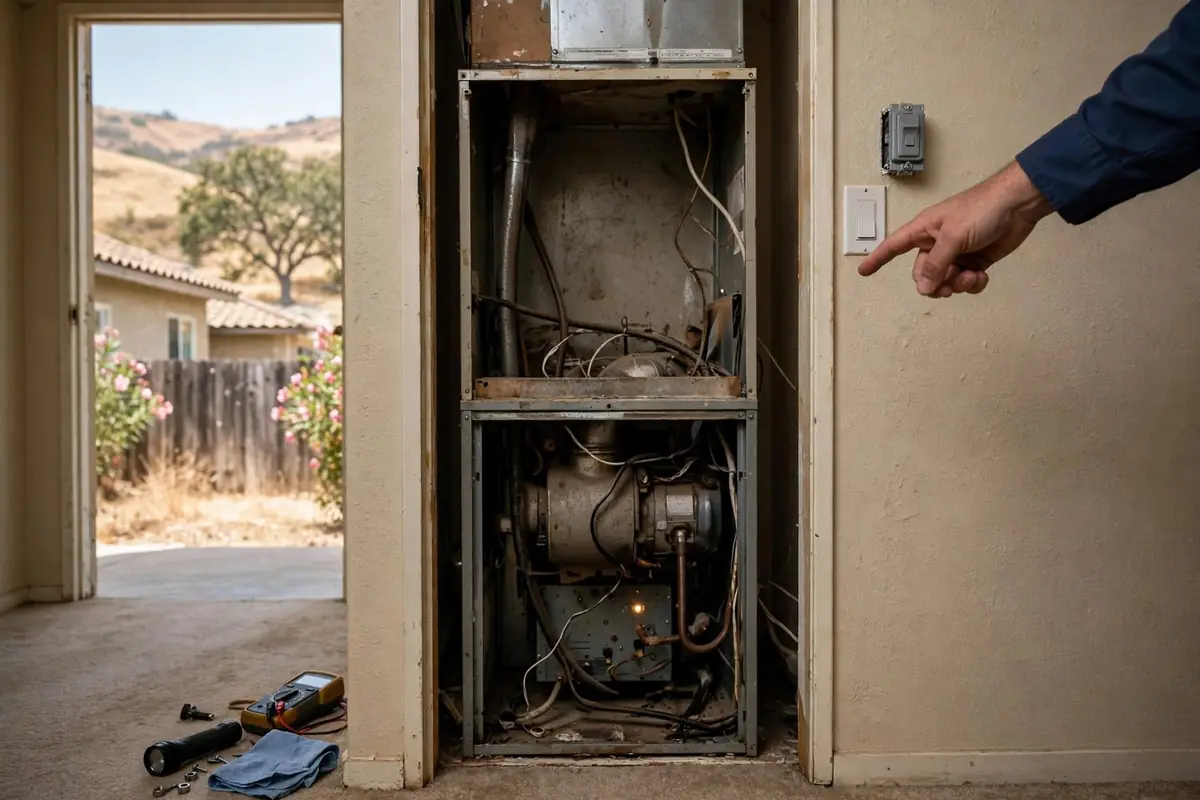
Sometimes the furnace isn't really broken. Before you settle in with space heaters, try these homeowner-safe checks:
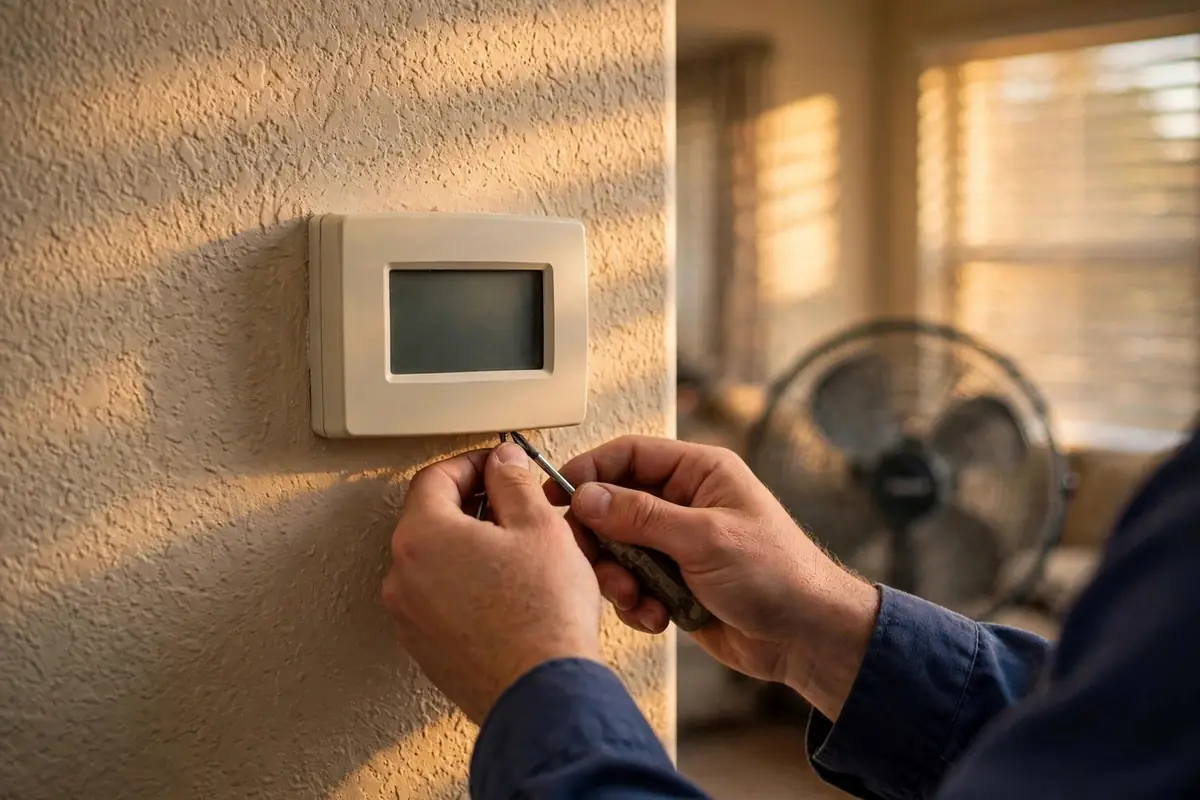
- Thermostat on Heat, set a few degrees above room temperature. Replace the batteries if the screen is blank (see thermostat blank).
- The furnace power switch is on, and the breaker hasn't tripped.
- The filter isn't clogged. A badly blocked filter can make a furnace shut itself down.
- The furnace door panel is fully closed. Most have a safety switch behind it.
- Reset once by turning the furnace switch off for a minute and back on.
If it still won't heat, the furnace not turning on page goes further, and the igniter vs flame sensor post explains the most common ignition failures. Write down what you saw and heard, including any blinking light code. Then call (707) 418-4772 to reach a participating local heating company, and mention that you're relying on space heaters so they understand the urgency.
Sources
- NOAA NCEI, U.S. Climate Normals 1991–2020 (station files for Vacaville, Nut Tree Airport, Fairfield, Vallejo)
- U.S. Census Bureau, American Community Survey 2020–2024 5-year (tables B25003, B25035, B25040), via Census Reporter
- PG&E, Gas safety and emergencies
- MCE, Service area
Last reviewed 2026-11-12 by the RD Heat & Air editorial team. Editorial policy.