AC running but not cooling
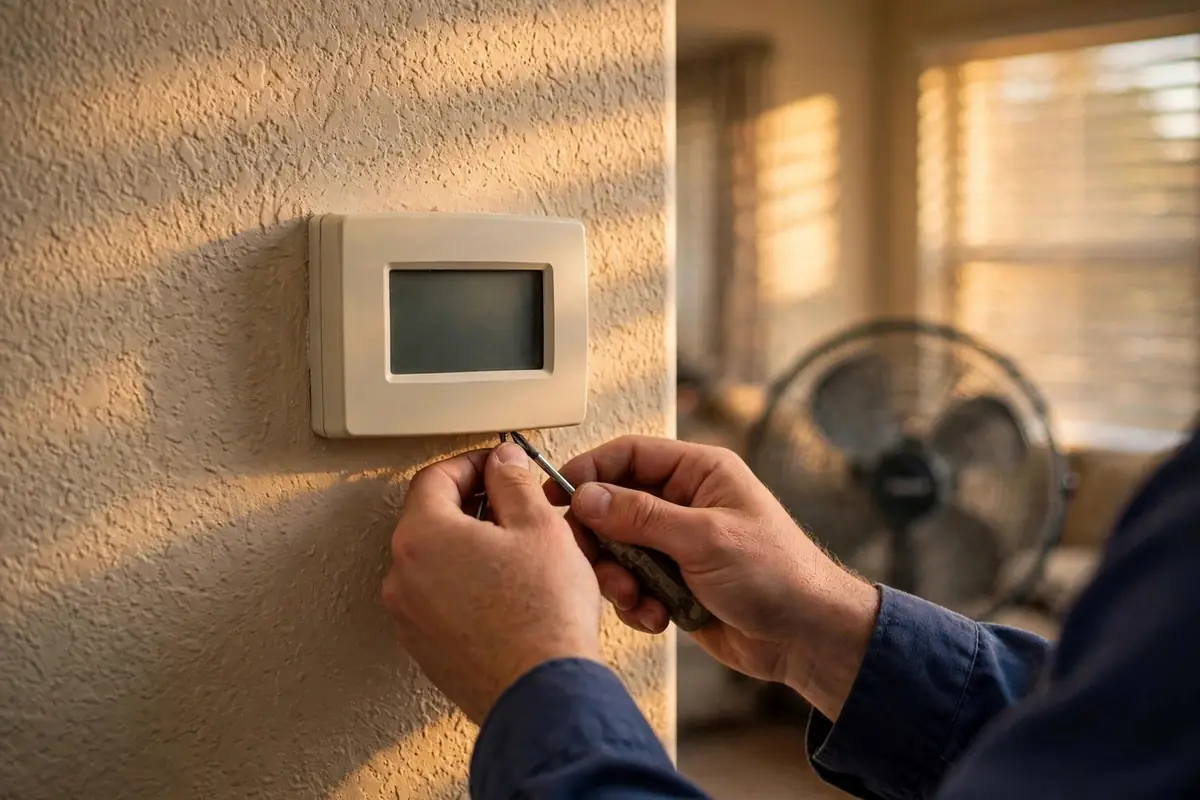
- Thermostat on Cool, fan on Auto, set below room temperature.
- Replace the air filter if it's dirty. A clogged filter is the most common cause of weak cooling and frozen coils.
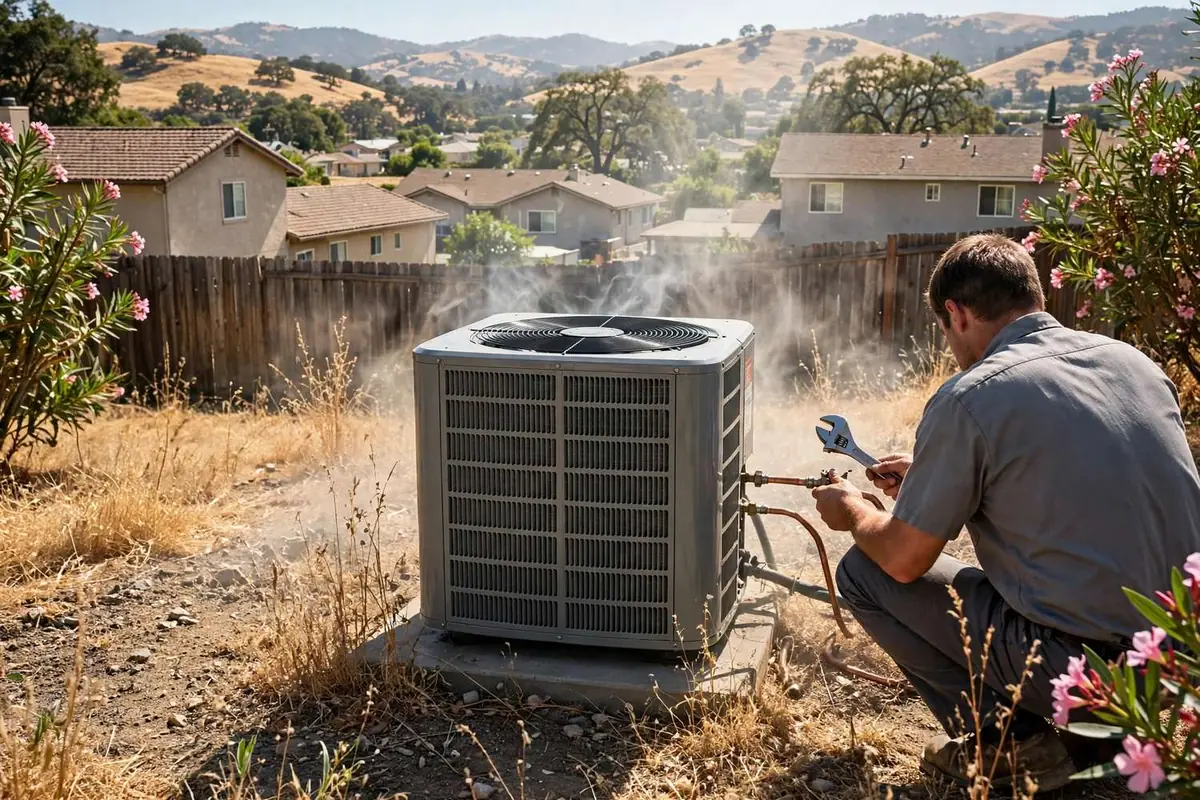
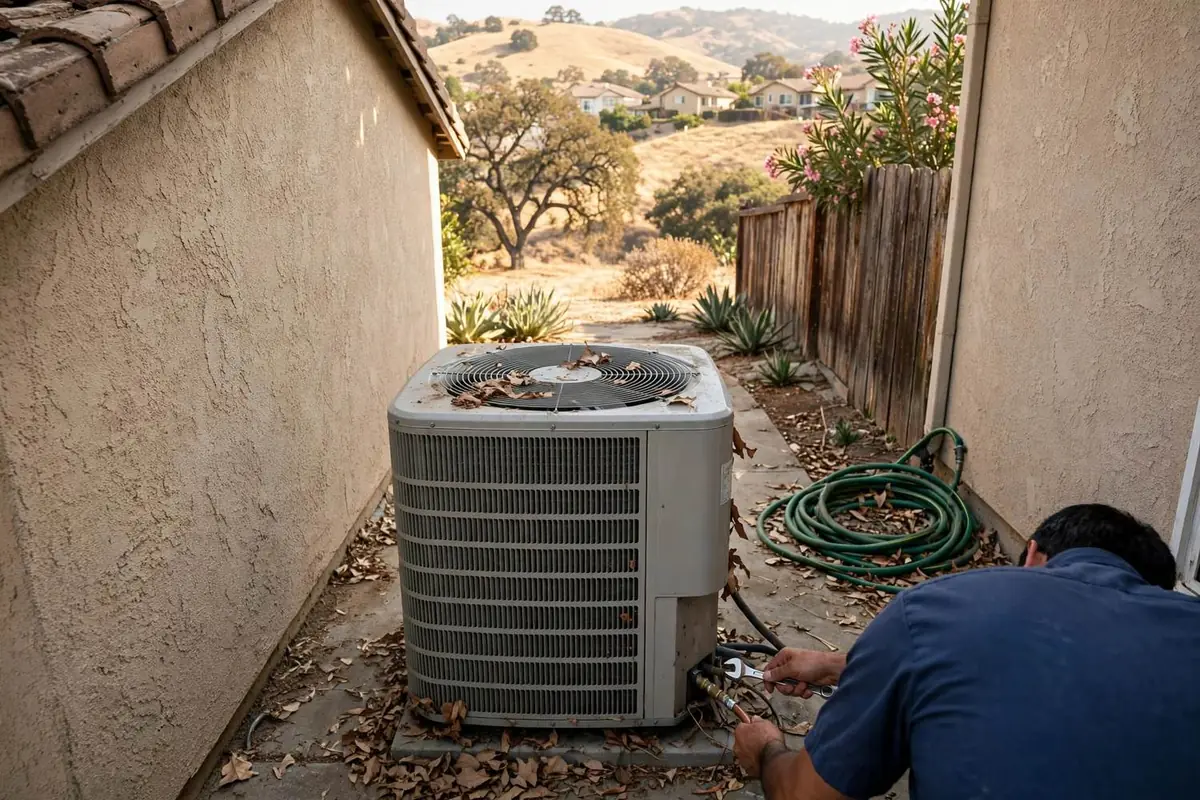
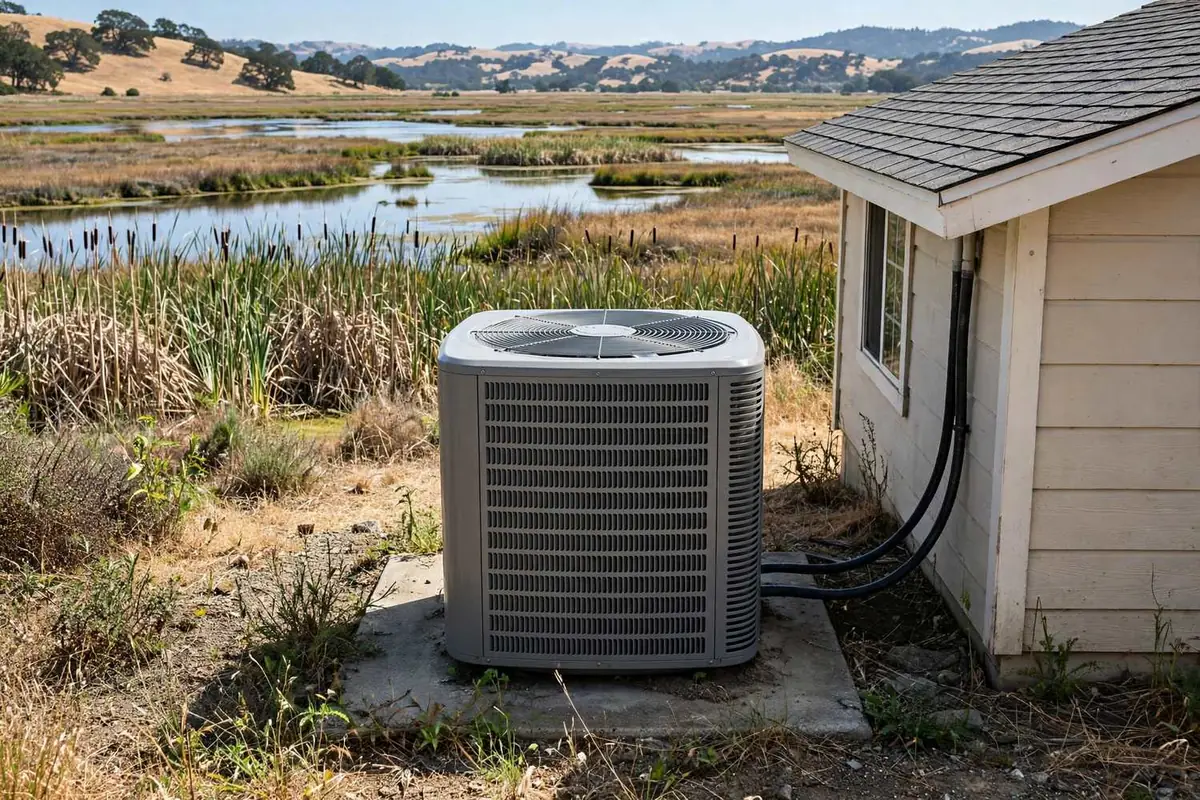
- Go outside: is the condenser fan spinning and is the unit humming? Clear plants, debris and anything stacked against it. Two feet of clearance is a good rule.
- Check that supply registers are open and the return grille isn't blocked by furniture.
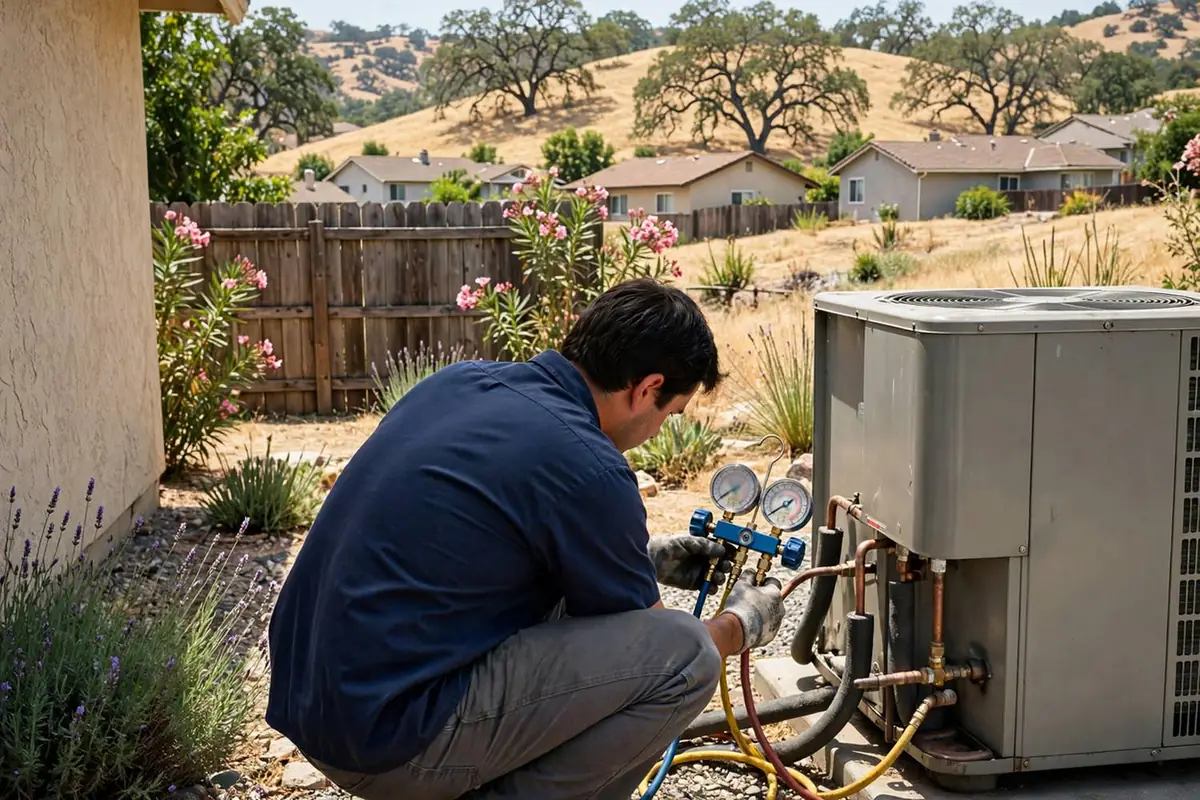
If the outdoor unit runs and the filter is clean but the air is still warm, common causes are low refrigerant from a leak, a dirty outdoor coil, a failing compressor or a bad capacitor that lets the fan run but not the compressor. A technician measures pressures, temperatures and electrical readings to tell which.
Outside unit not running, or humming but not starting
If the indoor fan blows but the condenser outside is silent or just hums, the usual suspects are:
- Run capacitor: the most common AC failure after a heat wave. The unit hums but the fan or compressor won't start.
- Contactor: the switch that energizes the condenser can burn or stick.
- Tripped breaker or disconnect: check the outdoor disconnect box and the panel. Reset once. If it trips again, stop.
- Fan motor: the compressor runs but the fan doesn't spin, and the unit overheats and shuts down.
Don't open the condenser panel or touch capacitors. They hold a dangerous charge even with the power off.
Ice on the copper line or indoor coil
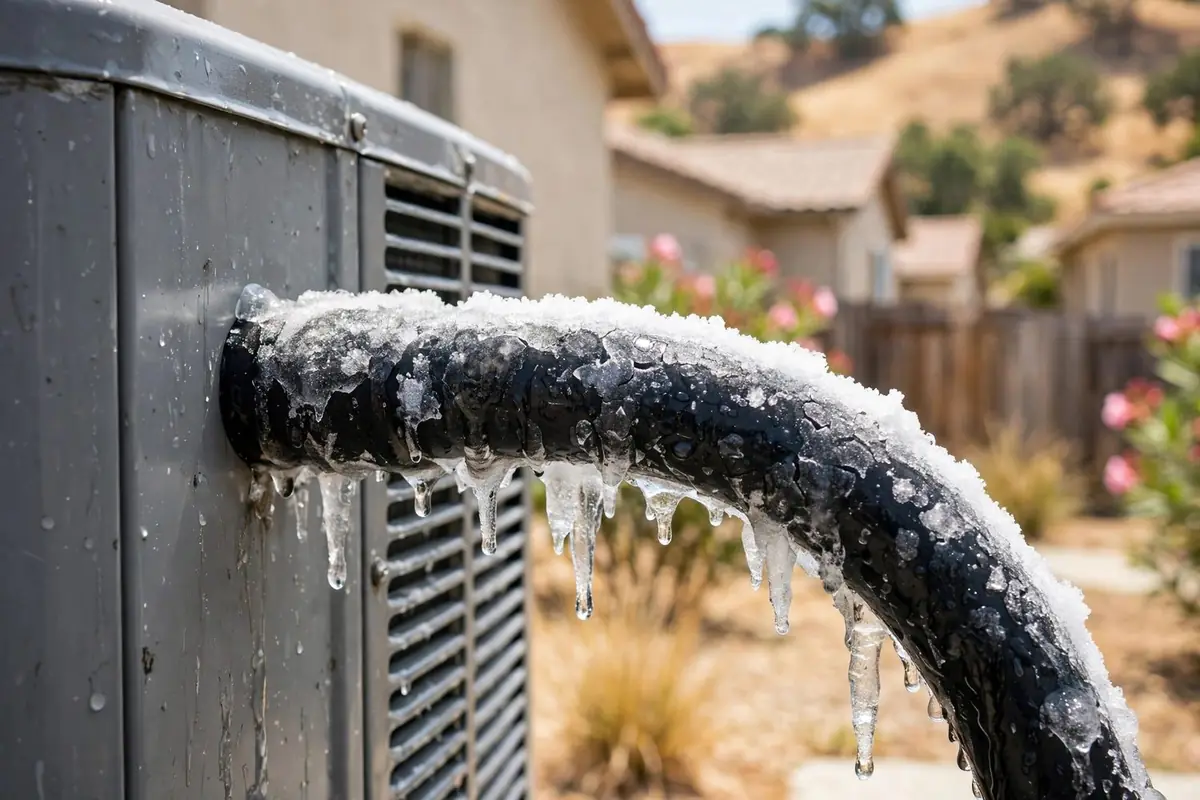
Ice means the coil is too cold. That comes from too little airflow (dirty filter, closed vents, failing blower) or low refrigerant. Turn the system to Off and the fan to On for a few hours to thaw it, replace the filter, then try cooling again. If it freezes again, call. Running a frozen system can damage the compressor.
Water around the indoor unit
Air conditioners pull moisture out of the air and drain it through a condensate line. A clogged drain, cracked pan or failed condensate pump causes water on the floor or ceiling stains under attic units. Many systems have a float switch that shuts the AC off when the pan fills, which looks like "AC stopped working." Clearing the drain fixes it; repeated clogs need a proper drain repair.
Why ACs fail during Solano County heat waves
Downtown Vacaville averages 97°F in July and about 28 days a year at 100°F or hotter. Fairfield averages about 90°F with about 11 days over 100°F (NOAA 1991–2020 normals). During the September 2022 heat wave, NOAA stations in Fairfield and Vacaville recorded highs around 114–115°F.
At those temperatures a condenser runs nearly nonstop, and weak capacitors, dirty coils and slow refrigerant leaks show up all at once. Every company's phone lights up at the same time, so problems caught early in spring are cheaper and faster to fix. The Delta breeze helps Fairfield and Suisun City in the evening; Vacaville sees less of it.
What the technician will usually check
- Thermostat and low-voltage signal to the condenser.
- Capacitor, contactor, fan motor and compressor electrical readings.
- Refrigerant pressures, superheat and subcooling.
- Indoor and outdoor coil condition and airflow.
- Condensate drain, pan and float switch.
Ask which refrigerant the system uses. Older R-22 systems are expensive to recharge, which affects the repair-or-replace decision.
What affects the price of an AC repair
- Electrical parts (capacitor, contactor) are usually small repairs; compressors and coils are major.
- Refrigerant leaks need finding and fixing before a recharge, and older refrigerant types cost more.
- Peak heat-wave days and after-hours visits often cost more.
- Access to the condenser and attic air handler.
See paying for repairs and repair vs replacement.
Troubleshoot a specific AC problem
- AC running but not cooling: step-by-step checks
- Outside unit not running: capacitor, contactor, breaker
- AC frozen or ice on the lines: thaw it safely, find the cause
- AC leaking water: drains, pans and float switches
- Heat-wave AC plan: before, during and after
- The Delta breeze and your AC: why Vacaville systems work harder
Sources
- NOAA NCEI, U.S. Climate Normals 1991–2020 (station files for Vacaville, Nut Tree Airport, Fairfield, Vallejo)
- NOAA NCEI, Global Historical Climatology Network daily records
- National Weather Service, Technical Attachment 95-21: the Delta breeze
- U.S. EPA, Frequent questions on the phasedown of HFCs
Last reviewed 2026-11-12 by the RD Heat & Air editorial team. Editorial policy.