Benicia at a glance for HVAC
| ZIP codes | 94510 |
|---|---|
| Households | 11,051 |
| Median year homes were built | 1981 |
| Owner-occupied homes | 70% |
| Homes heated with gas / electricity | 67% / 26% |
| July average high · January average low | 85.4°F · 42.0°F (Vallejo station (nearest NOAA normals)) |
| Days per year at 90°F+ / 100°F+ | about 36 / about 7 |
| Air quality district | Bay Area Air District (southwestern Solano; confirm with BAAQMD) |
| Electricity | PG&E delivery, MCE default generation; gas from PG&E |
Census ACS 2020–2024 5-year; NOAA U.S. Climate Normals 1991–2020.
A bayside climate
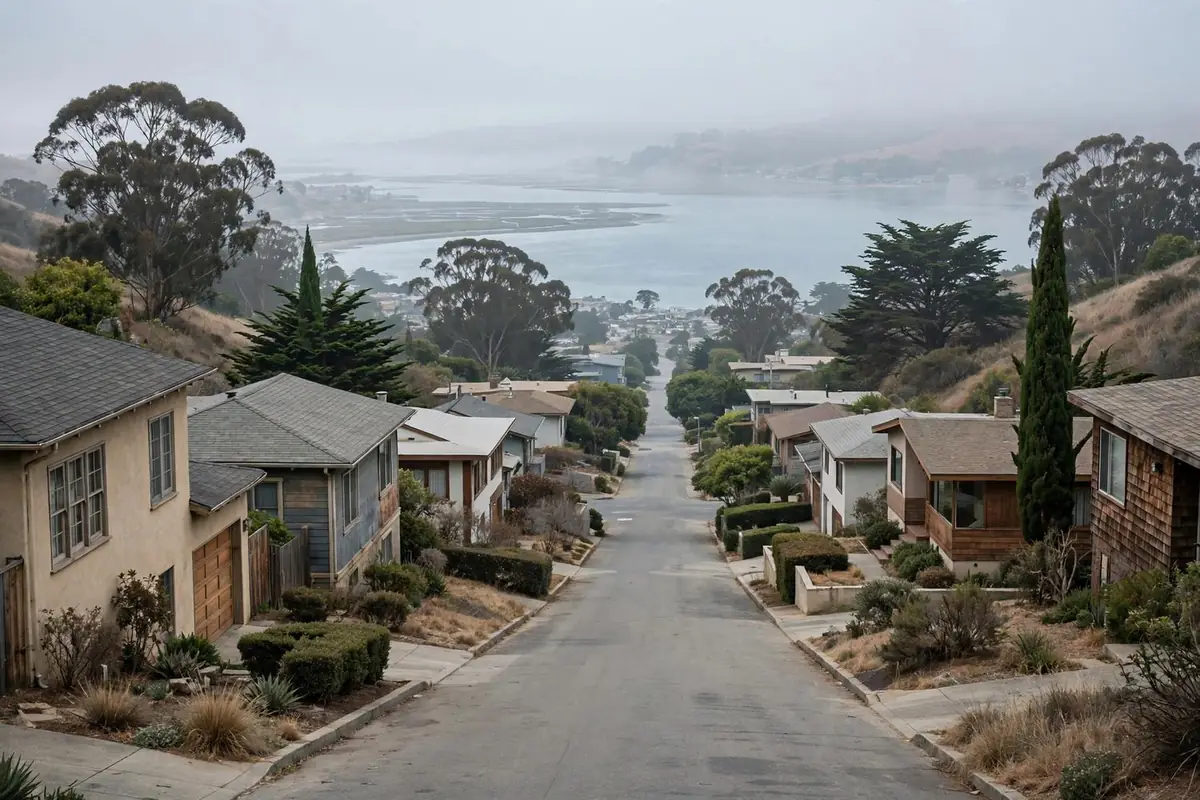
Benicia faces the Carquinez Strait, the gap that funnels the Delta breeze into Solano County. There's no NOAA normals station in Benicia; the nearby Vallejo station averages 85.4°F in July and 42.0°F on January nights, with only about 7 days a year at 100°F or hotter. Air conditioners here work far less than in Vacaville, but heat waves still happen. Vallejo's station recorded about 113°F in September 2017.
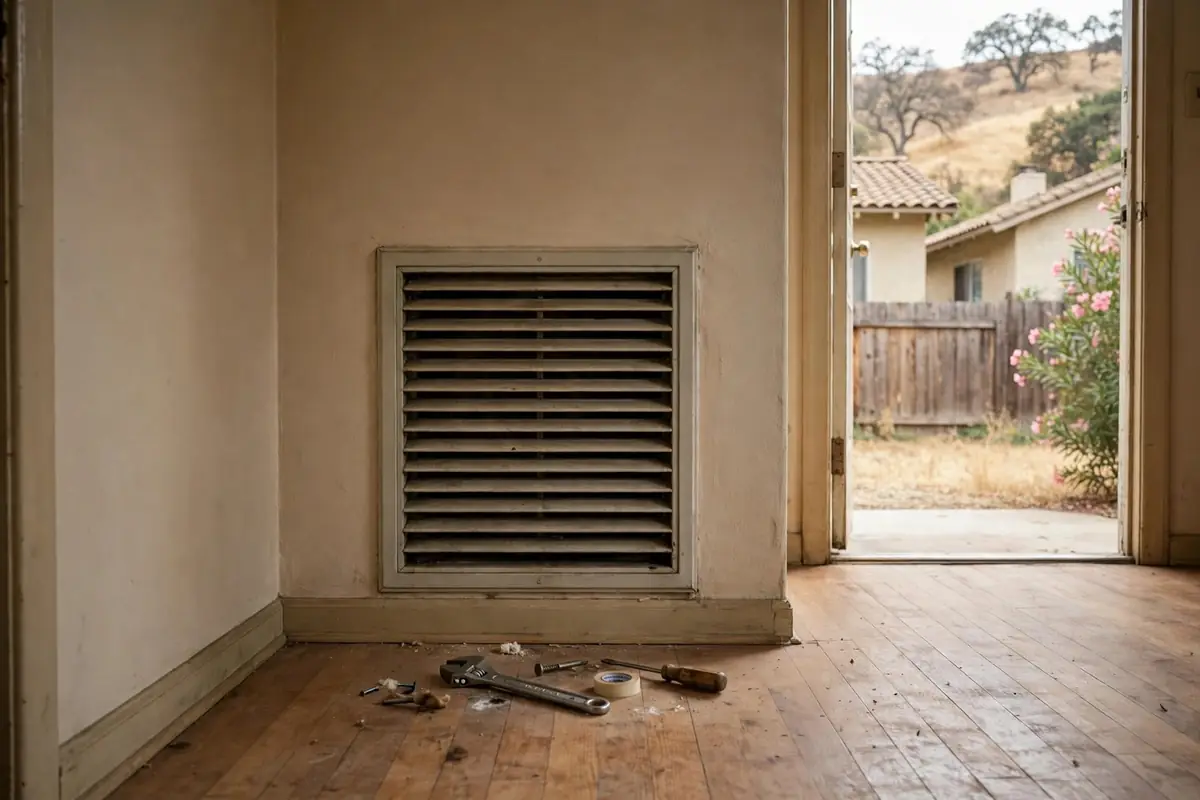
Because cooling demand is lower, many Benicia air conditioners are older and see little use. When they're finally needed in a heat wave, long-idle capacitors and refrigerant leaks show up.
Older and historic homes
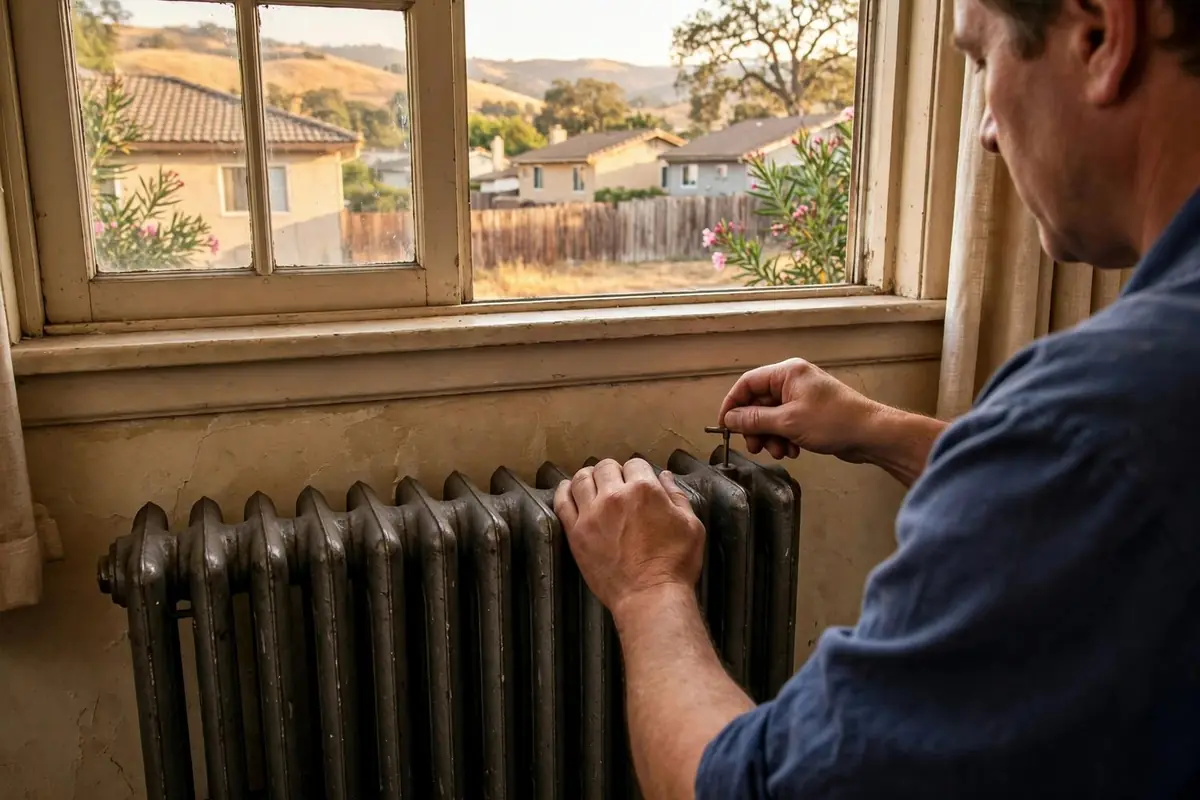
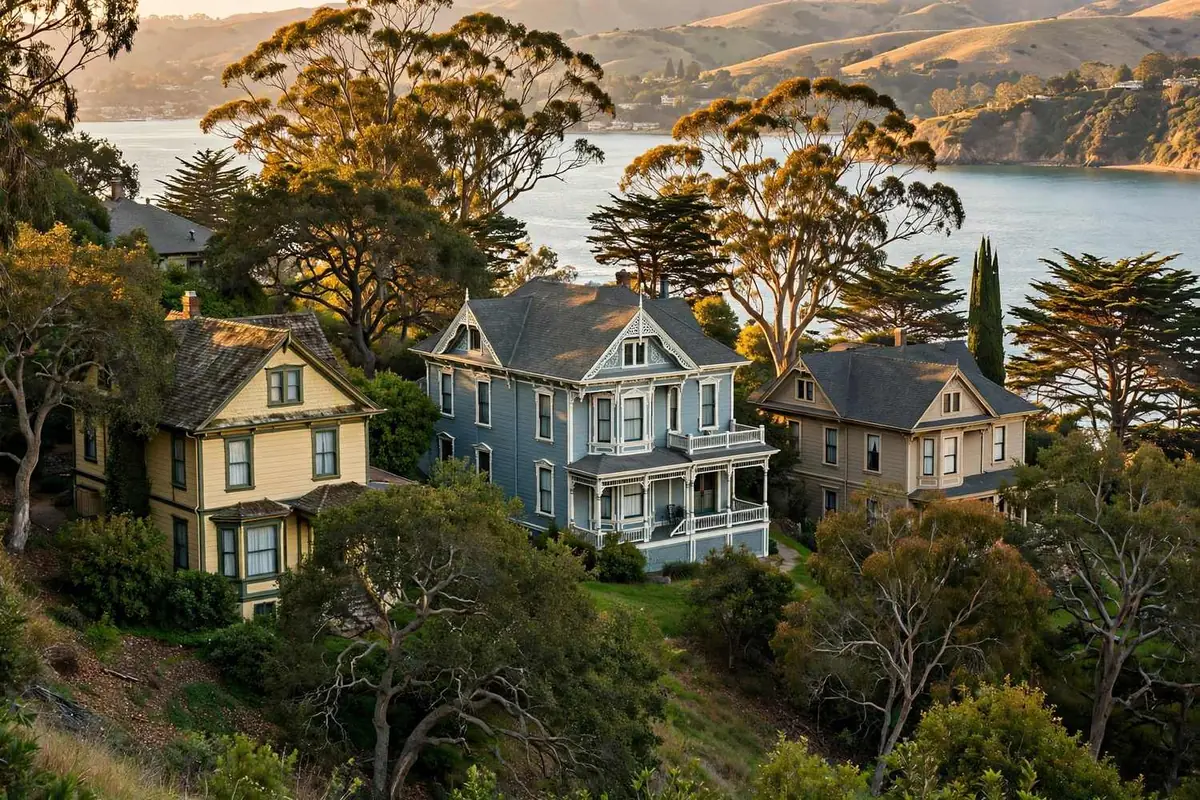
The median Benicia home was built in 1981, and about 70% are owner-occupied, the highest share in this part of Solano County. The Benicia Arsenal is a National Register historic district, and older parts of town include homes that predate central air. Some older homes use boilers and radiators or wall furnaces; boiler and radiator calls are accepted on the line. See boilers and radiators.

Common Benicia calls
- Furnace not lighting on the first cold, damp night.
- Heat pumps frosting on foggy mornings; about 26% of homes heat with electricity.
- AC not cooling when a rare heat wave hits.
- Smoke-season filter changes; southwestern Solano is generally in the Bay Area Air District.
Permits
HVAC replacements need a permit from the City of Benicia Building Division (250 East L St). California's 2025 Energy Code requires duct sealing and third-party verification on replacements. See permits and Title 24.
What to tell the dispatcher
- Your ZIP code (94510).
- System type: gas furnace, heat pump, boiler or central AC.
- What it's doing, in one sentence.
- What you already checked.
- Whether anyone at home is vulnerable to heat or cold.
Ask the company for its C-20 license number, arrival time, how the diagnostic visit is charged, and a written price before work starts.
Sources
- U.S. Census Bureau, American Community Survey 2020–2024 5-year (tables B25003, B25035, B25040), via Census Reporter
- NOAA NCEI, U.S. Climate Normals 1991–2020 (station files for Vacaville, Nut Tree Airport, Fairfield, Vallejo)
- NOAA NCEI, Global Historical Climatology Network daily records
- National Weather Service, Technical Attachment 95-21: the Delta breeze
- MCE, Service area
- California Energy Commission, Energy Code Support Center: HVAC FAQ
Last reviewed 2026-11-12 by the RD Heat & Air editorial team. Editorial policy.