Why the filter matters more than you'd think
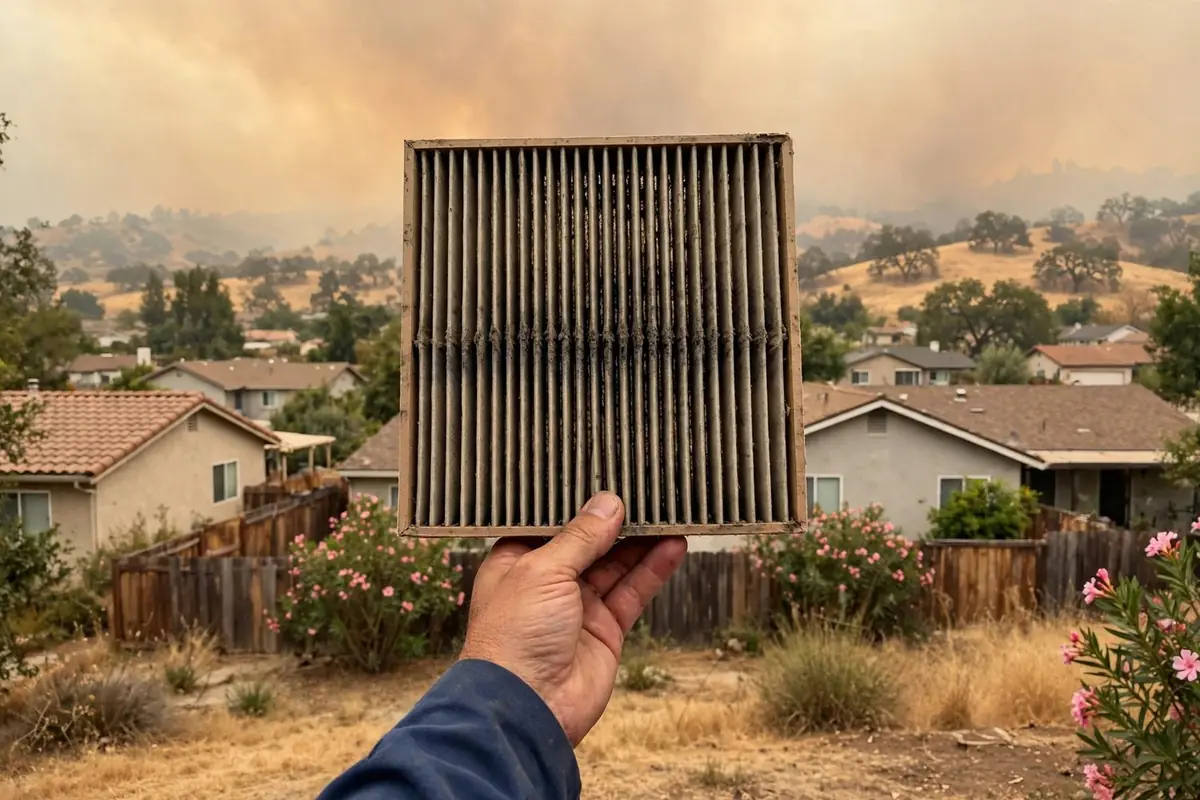
The furnace filter protects the equipment first and your lungs second. It keeps dust off the blower, the heat exchanger and the AC coil that sits on top of most furnaces. When it clogs, airflow drops, and low airflow causes a whole chain of problems:
- The furnace overheats and shuts itself off on its high-limit switch, then restarts. That looks like furnace short cycling.
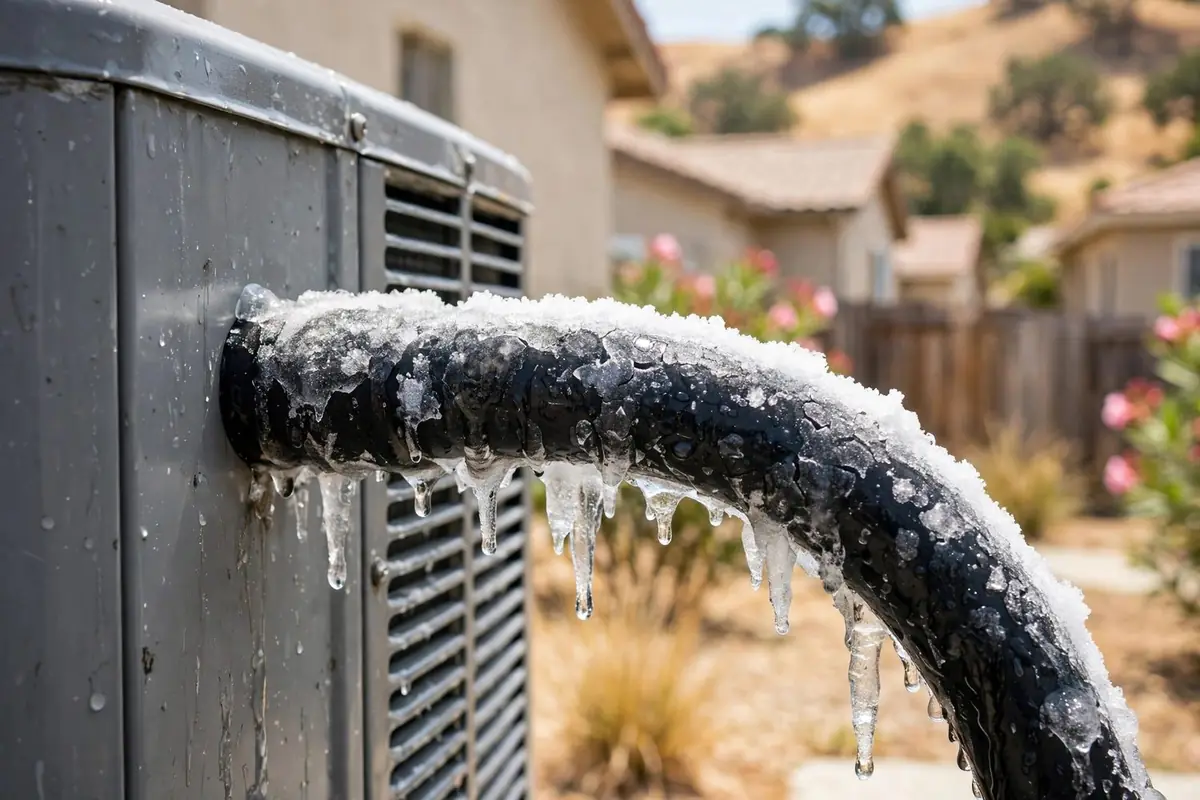
- In summer, the AC coil gets too cold and ices up. See AC frozen.
- Rooms at the end of long duct runs get weak air.
- Over years, the heat stress wears the furnace out sooner. The furnace lifespan post explains why.
A lot of "my system isn't working right" calls start with a filter nobody has looked at since spring.
Where is your filter?
In Solano County homes, the filter is usually in one of two places:
- Behind a return grille, the large vent in a hallway ceiling or wall. This is common in 1980s tract homes with attic furnaces in Fairfield, Suisun City and Vacaville. The grille swings down or unclips, and the filter sits right behind it.
- At the furnace itself, in a slot between the return duct and the furnace cabinet. This is common with garage, closet and some attic installs.
Some homes have more than one return grille, each with its own filter. If you find a filter at the grille, you usually don't need another at the furnace, and doubling up can choke airflow. If you're not sure, ask the technician at your next visit to show you.
If the filter is in the attic, take care on the ladder and walk only on the framing or a walkway. In summer, the attic can be dangerously hot by late morning, so change it early in the day.
How to read a filter size
The size is printed on the cardboard edge of your current filter, as three numbers: width, height and depth in inches. For example, 16 x 25 x 1 or 20 x 20 x 4.
Two things trip people up:
- That printed size is the nominal size, rounded up. The actual filter is usually a bit smaller so it slides in. Buy by the nominal size on the label.
- Depth matters. A 1-inch filter and a 4-inch media filter are not interchangeable, even with the same width and height.
Don't have the old filter? Measure the slot or the grille opening and look for a sticker on the furnace. Take a photo of the label with your phone so you have it next time. A filter that's too small lets air, and dust, go around it. The EPA notes that a filter should fit snugly so air doesn't leak around it.

What MERV ratings mean
MERV stands for Minimum Efficiency Reporting Value. It comes from a national test standard, and the higher the number, the better a filter catches small particles. Store brands may also use their own scales, such as FPR or MPR, which don't convert exactly to MERV. When in doubt, look for the MERV number on the package.
| MERV | What it catches well | Good for |
|---|---|---|
| 1 to 4 | Large dust and lint | Basic equipment protection only (thin fiberglass filters) |
| 5 to 8 | Dust, pollen, most pet hair, mold spores | Everyday use in most homes |
| 9 to 12 | Finer dust and more fine particles | Pets, allergies, dusty areas |
| 13 to 16 | Fine particles, including much of the smoke-sized range | Wildfire smoke, allergies, if your system can handle it |
Higher isn't automatically better. A tighter filter can restrict airflow, especially a 1-inch filter in a system with small return ducts. That's the trade-off you're managing.
Which MERV should you use in Solano County?
For most homes, a pleated MERV 8 to 11 filter is a sensible everyday pick. It protects the equipment and catches a good share of pollen and dust without choking airflow.
Step up when there's a reason:
- Wildfire smoke. The EPA recommends a filter rated at least MERV 13, or as high as your system will accommodate, and says most furnaces and HVAC systems can take a MERV 13 (EPA Guide to Air Cleaners in the Home). The 2020 LNU Lightning Complex fire burned into Vacaville and toward Fairfield, and smoke from fires across Northern California can settle over the county in late summer and fall.
- Allergies or asthma in the household.
- Indoor pets that shed heavily.
- Homes next to open fields, orchards or construction, common on the edges of Vacaville and Dixon.
If you move up to MERV 13 with a 1-inch filter and notice weaker airflow, a whistling return or the furnace shutting off early, go back down and ask a technician about a deeper media filter cabinet. A 4-inch filter has more surface area, so it can filter finer without the same airflow penalty.
How often should you change it?
EPA notes that manufacturers typically recommend replacement every 60 to 90 days, and that heavily soiled filters should be changed more often. In practice, check it monthly and change it when it looks gray or you can't see light through it. Here's a starting schedule for 1-inch pleated filters:
- Mild seasons, light use, no pets: check every month, change every 2 to 3 months.
- Peak AC season in Vacaville or Dixon, when the blower runs most of the day: check monthly, expect to change more often.
- Pets, especially dogs that shed: change every month or two.
- During and after a smoke event: check weekly. Smoke loads a filter fast.
- After remodeling, drywall work or a dusty project: change it as soon as the work is done.
- Before the first heating day in fall: always start the season with a clean filter.
- 4-inch media filters: follow the maker's schedule, often longer, but still check.
Remember that Vacaville summers are long. Downtown Vacaville averages about 101 days a year at 90°F or hotter, compared with about 36 in Vallejo (NOAA 1991 to 2020 normals). The same filter serves your AC and furnace, so a hot inland summer uses it up faster than the calendar suggests.

How to change a furnace filter
- Turn the system off at the thermostat.
- Open the return grille or pull the filter out of the slot at the furnace.
- Note the arrow on the filter edge. It points toward the furnace, in the direction air flows.
- Slide the new filter in with the arrow pointing the same way. Make sure it sits flat with no gaps.
- Close the grille or slot cover, then turn the system back on.
- Write the date on the filter edge so you know when you changed it.
That's the whole job. Don't open furnace panels beyond the filter slot. If the filter area is soaked, black with soot or sucked into the duct, leave it and call; those point to bigger problems.
Should the fan run on during smoke?
Your HVAC filter only cleans air when the blower is running. The EPA notes that systems typically run less than a quarter of the time, and running the fan longer filters more air but raises electricity use. During a smoke event, one reasonable option is to set the fan to On for a while, with windows closed and a MERV 13 filter in place, and accept the higher bill for those days.
If you have a fresh-air intake or a whole-house fan, close it during smoke. Air district advisories also matter: Fairfield, Suisun City, Benicia and Vallejo are in the Bay Area Air District, while Vacaville and Dixon are in the Yolo-Solano district. The wildfire smoke guide covers the full plan, including portable air cleaners.
Filter problems that need a technician
A filter can't fix every airflow problem. Call if you see:
- A new filter gets dirty unusually fast, which can point to leaky return ducts pulling attic dust.
- The filter bows or gets sucked into the slot.
- Black streaks on the filter or around return grilles, which can mean soot or duct leaks.
- Weak airflow or warm rooms even with a clean filter. See AC not cooling for summer checks.
- Ice on the AC lines or a furnace that keeps shutting off with a fresh filter.
Call (707) 418-4772 to reach a participating local HVAC company. Mention the filter size and MERV you're using and when you last changed it; that helps the technician start in the right place.
Sources
- NOAA NCEI, U.S. Climate Normals 1991–2020 (station files for Vacaville, Nut Tree Airport, Fairfield, Vallejo)
- Bay Area Air District, Solano County
- California Air Resources Board, Yolo-Solano AQMD
Last reviewed 2026-11-12 by the RD Heat & Air editorial team. Editorial policy.