Why short cycling matters
Frequent starts wear the igniter, inducer and blower, waste gas, and leave rooms uneven. In a mild climate like Solano County, an oversized furnace reaches the thermostat setting very quickly and shuts off, which feels like short cycling even when nothing is broken.
Check in this order
- Filter: replace it.
- Registers and returns: open and unblocked.
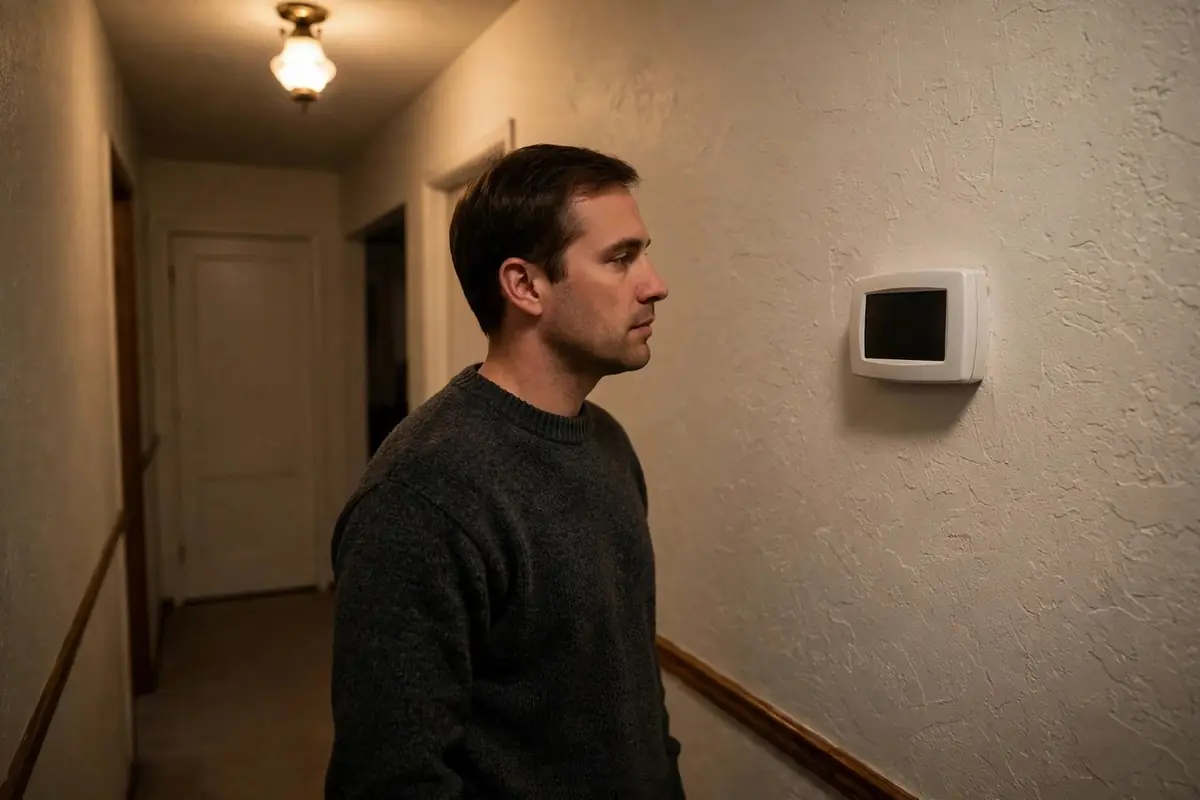
- Thermostat location: not in sun, near a lamp, kitchen or supply vent.
- Run time: count how long it runs. Under 3 minutes repeatedly is a problem.
What the technician checks
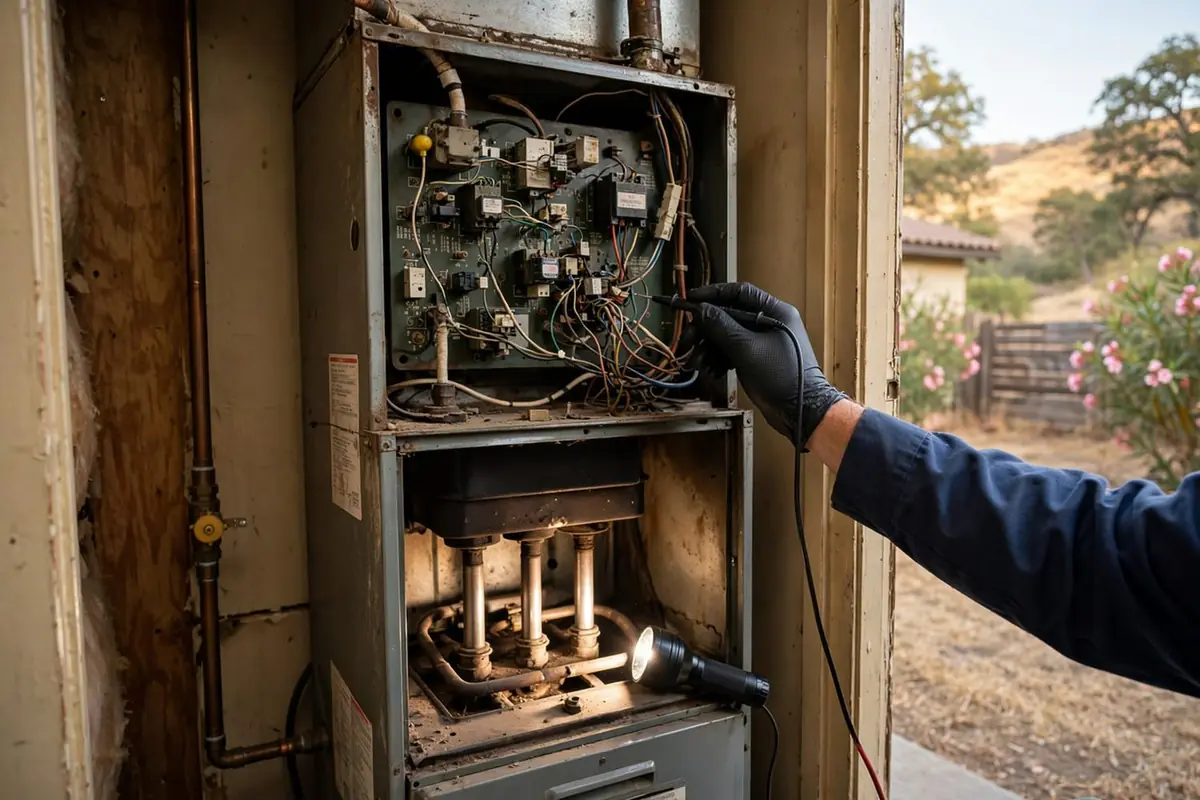
Temperature rise across the heat exchanger, limit switch operation, flame signal, static pressure in the ducts, and whether the furnace capacity fits the house. Old attic flex duct that's crushed or undersized can cause overheating trips.
Stop and call if
you smell gas or burning plastic, see scorch marks or sparks, a carbon monoxide alarm sounds, or a breaker trips a second time. For gas or CO: leave the house and call 9-1-1, then PG&E at 1-800-743-5000.

Short cycling in heat pumps and ACs too
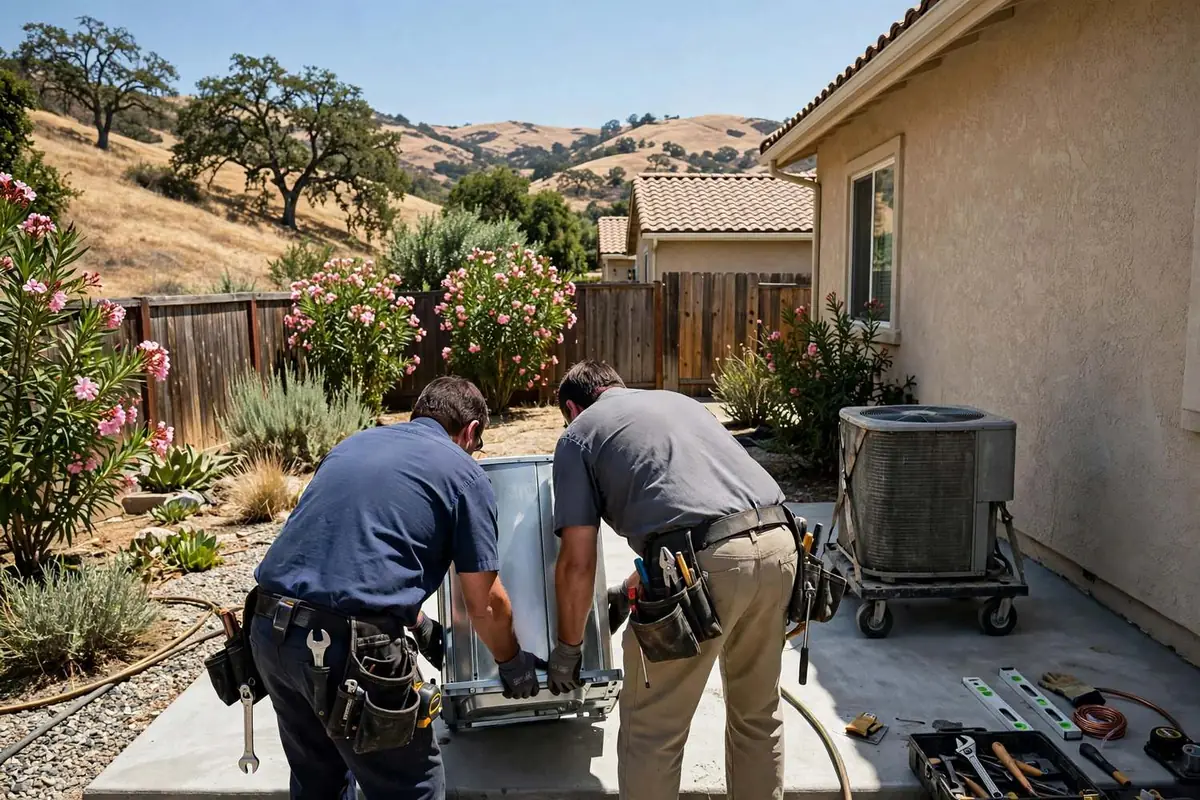
Air conditioners and heat pumps short cycle too, usually from a dirty coil, low refrigerant, a bad thermostat location, or an oversized unit. In summer, rapid on-off cycling also leaves the house humid and wears the compressor. If both heating and cooling short cycle, look first at the thermostat and the ductwork.
How oversizing happens
Many replacements are sized by copying the old unit's capacity rather than doing a load calculation. In Solano County's mild winters, a large furnace satisfies the thermostat in a few minutes. California's code now pushes better duct sealing, which can make an oversized system cycle even faster. Ask for a Manual J calculation when replacing.