Why holiday weeks are hard on a furnace
Thanksgiving week asks a lot of a heating system that may have only run a handful of times this season. The house fills up. Doors open and close all day. Rooms that have been shut since last Christmas suddenly need to be warm by bedtime. And it all happens on a long weekend, when many local companies run lighter crews.
None of that is a reason to panic. A furnace that's in decent shape handles a crowd fine. The trouble is that small problems you've been ignoring, a dirty filter, a weak flame sensor, a guest room with a closed vent, tend to show up exactly when you have the least patience for them.
In Solano County the timing is extra awkward. Late November is often the first stretch of real heating weather. NOAA's 1991 to 2020 normals put January lows around 40°F in Fairfield and Vacaville, and late fall nights can already drop into the 30s on the valley side. A system that sat idle from April to early November is just getting going.
What to check the week before guests arrive
Do this on Monday or Tuesday, not Wednesday night.
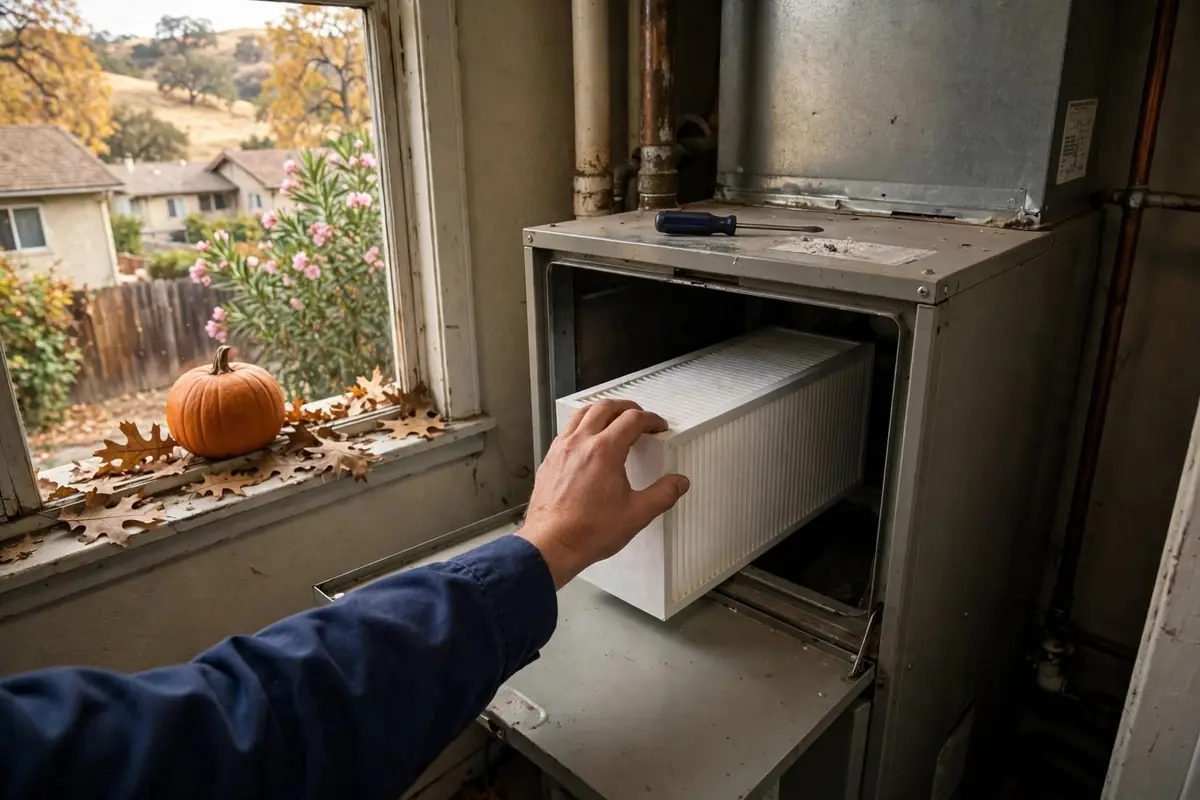
- Put in a new furnace filter. If you already changed it in October and you have pets or a lot of dust, check it again anyway.
- Run the heat for a full cycle and listen. New noises, a burning smell that won't fade, or a furnace that lights then shuts off are worth a call now, while there's time to book.
- Open every supply vent in the guest rooms, office and anywhere else that's been closed off.
- Find the return grilles and make sure nothing is stacked against them.
- Test every carbon monoxide alarm and smoke alarm. Replace batteries if needed.
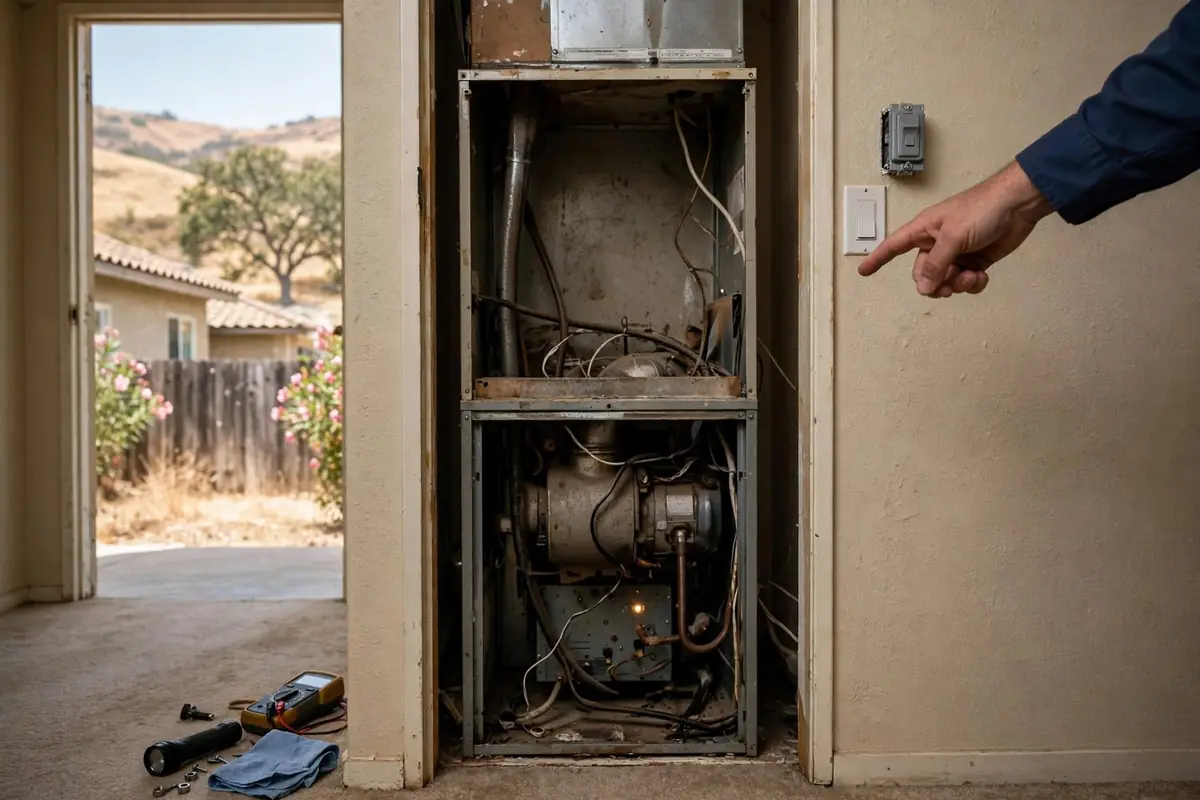
- Clear the space around the furnace, especially in the garage, which tends to fill up with coolers, folding chairs and drinks over the holidays.
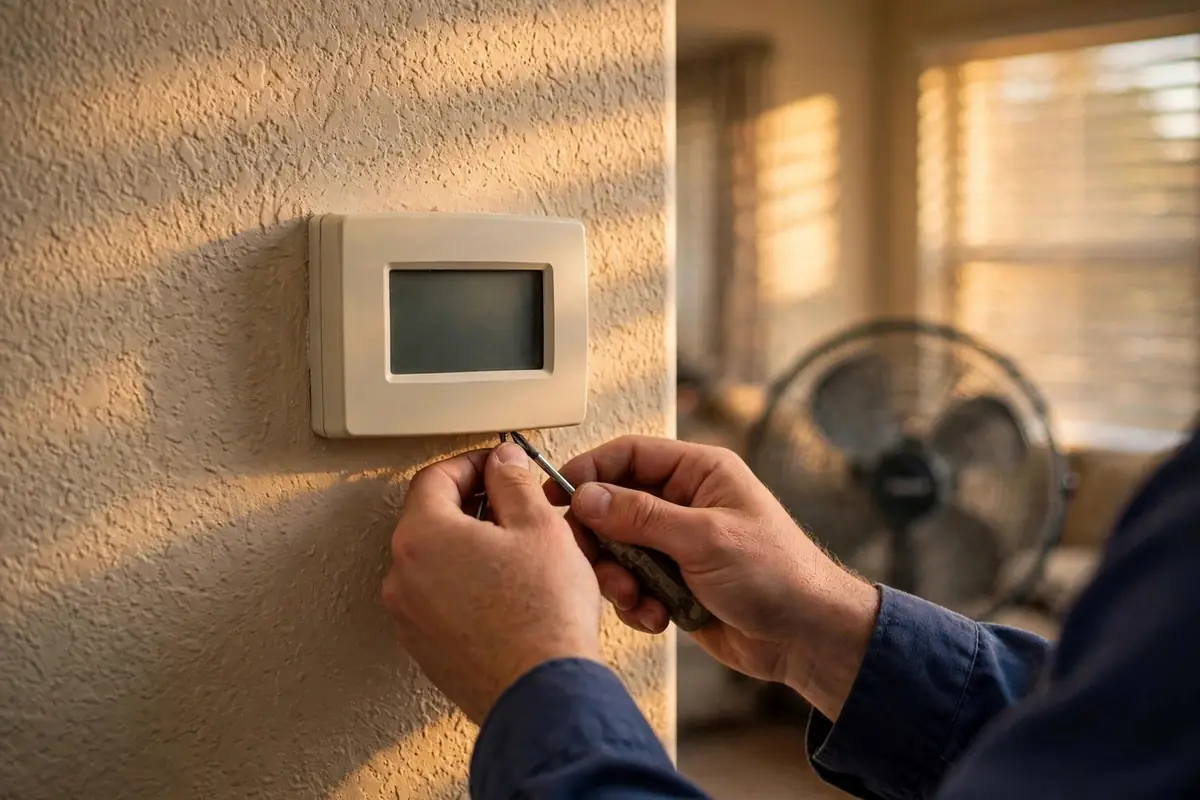
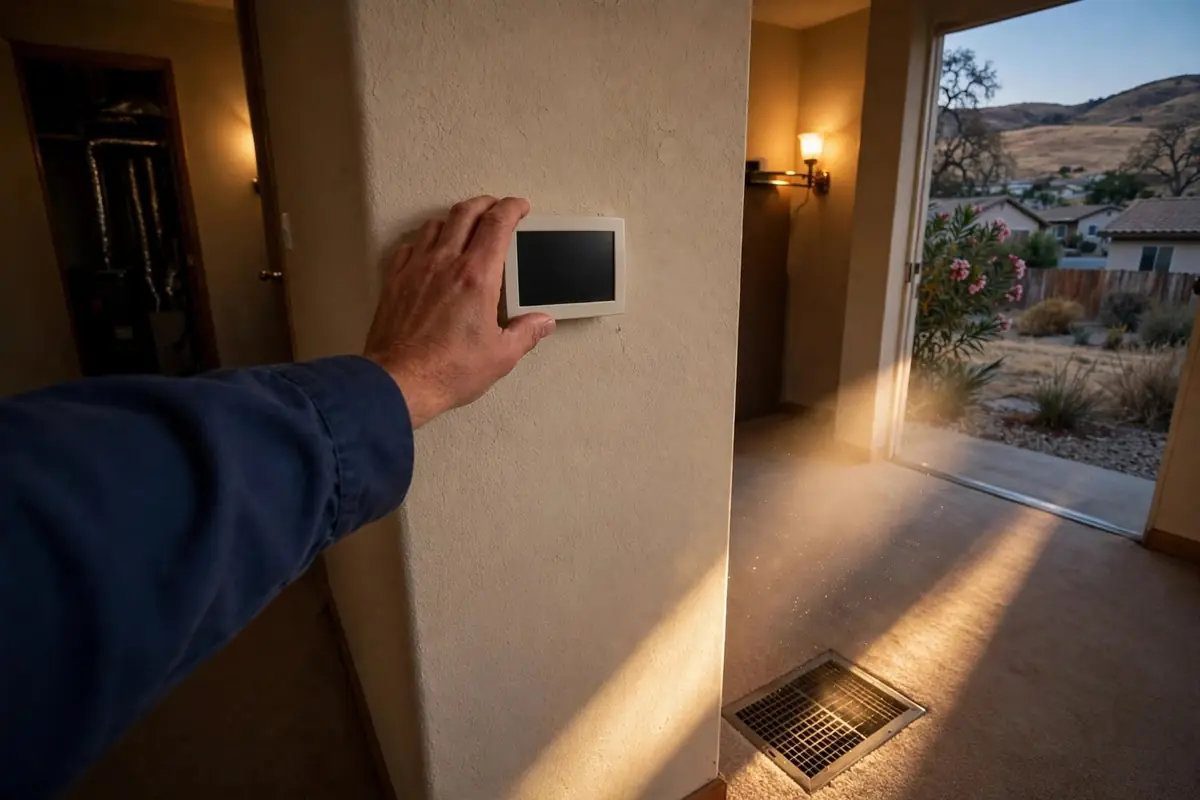
- Check the thermostat batteries. A blank screen on Thursday morning is a bad surprise.
That list takes under an hour. If anything on it turns up a problem, the filter guide and the fall furnace checklist go deeper.
Why the kitchen throws off the whole house
Here's a pattern that confuses a lot of hosts. By early afternoon on Thanksgiving, the kitchen and living room feel warm, almost stuffy. Meanwhile the back bedrooms where grandparents are napping feel chilly.
Two things cause it. An oven running for hours, a stovetop full of pots and a room full of people all put out heat. If the thermostat is in a hallway near the kitchen or family room, which is common in 1980s tract homes (the median Fairfield home was built in 1986 and Vacaville's in 1985, per Census ACS), it reads that heat and decides the house is warm enough. The furnace stops running, and the rooms farthest from the kitchen cool off.
What helps:
- Set the fan to "On" for the afternoon. It mixes the warm kitchen air into the rest of the house without the burners running.
- Keep bedroom doors open when nobody is sleeping, so air can move back to the return.
- If you have a smart thermostat with remote sensors, put one in the coldest bedroom for the weekend.
Set the fan back to "Auto" afterward. If one room is always cold, not just on holidays, the cold room guide covers ducts, dampers and returns.
Guest rooms that sat closed all year
The spare room is the most common source of holiday heating complaints, and it's usually not the furnace's fault.
People close the vent in a room they don't use, then forget about it. Or the vent is open but hidden under a bed, a box of decorations or a rug. An air mattress laid flat over a floor register blocks it completely. And a room with the door shut and no return grille of its own can't get much warm air in, because the air has nowhere to go out.
Walk through each guest room and check the register with your hand once the heat is running. You should feel warm air. If you don't, look for a closed lever on the register first. If it's open and still weak, there may be a crushed or disconnected duct in the attic or crawlspace, which is a technician job.
Don't solve a cold guest room by closing vents in the rest of the house. Closing a lot of registers raises pressure in the ducts and cuts total airflow. That can make the furnace overheat and shut itself off on a safety switch, which is the opposite of what you want on a holiday.
Space heaters, cords and guest rooms
A space heater in the guest room is a reasonable backup on a cold night. Use it carefully. Keep it a few feet from bedding, curtains and luggage. Plug it straight into a wall outlet, not a power strip or a thin extension cord. Turn it off when the room is empty, and don't leave it running in a room where a young child or a pet is alone.
Holidays are when space heaters get pulled out of the garage after a year in a box, and that's when you should check the cord and plug for damage. The space heater safety guide has the full rundown, including what to do if the furnace is down.
Never heat the house with the oven
If the furnace quits on Thanksgiving, the oven is right there and already hot. It's tempting to leave the door open after the turkey comes out. Don't.
The CDC's guidance is plain: don't heat your house with a gas oven. A gas range isn't built to run for hours as a heater, and it can build up carbon monoxide inside a closed house. The same goes for grills, camp stoves and patio heaters brought indoors.
While you're cooking, run the range hood if you have one, especially with a full house. A crowded kitchen with every burner lit puts a lot of combustion products and moisture into the air. And keep an eye on the stove. The National Fire Protection Association has reported for years that Thanksgiving is the peak day for home cooking fires, with unattended cooking as the leading cause.
Make sure your CO alarms work before anyone arrives. The CO alarm guide covers what California requires and where alarms should go.
Signs the furnace needs help, not patience
| What happens | Likely meaning | What to do |
|---|---|---|
| Dusty smell on the first runs of the week | Dust burning off | Normal; open a window |
| Blower runs but only cool air comes out | Ignition problem or a safety lockout | Check the filter and thermostat, reset once, then call |
| Furnace starts and stops every few minutes | Overheating from airflow problems, or a flame sensor issue | Change the filter, open vents, then call if it continues |
| Rotten-egg smell | Gas leak | Everyone out, then call 9-1-1 and PG&E at 1-800-743-5000 |
| CO alarm sounds | Possible combustion or venting problem | Everyone out, call 9-1-1 |
| Loud bang when it lights | Delayed ignition | Turn it off at the switch and call |
The furnace blowing cold air page covers the most common holiday failure in detail.
If the furnace quits over the holiday weekend
First, do the safe checks. Thermostat on Heat and set a few degrees above the room temperature. Breaker on. Furnace switch on. Filter not clogged. Furnace door panel seated. Then reset once by turning the furnace switch off for about a minute and back on.
If it fails again the same way, stop resetting. Decide how urgent it is. A cold house on a 55°F afternoon with everyone in sweaters is uncomfortable. A cold house on a frosty night with a baby or an elderly guest is more pressing. Gas smells and CO alarms are emergencies every time.
The emergency HVAC page explains what counts as urgent and what to expect after hours. Holiday availability varies by company, so calling earlier in the day helps. RD Heat & Air is a referral line that connects you with participating local heating companies. Call (707) 418-4772 and describe what the furnace is doing.
After the guests leave
Once the house empties out, put things back. Close the guest room door if you like, but leave the vent open. Move the coolers and folding tables out of the furnace's way. Set the thermostat fan back to Auto and return to your normal schedule. The winter thermostat settings guide covers what makes sense for PG&E bills.
If the furnace acted up at all during the week, even once, write down what it did and when. Small symptoms that show up under a heavy holiday load often come back on the first truly cold night in December. Booking a check in early December is easier than calling on a frosty Saturday.
Sources
- NOAA NCEI, U.S. Climate Normals 1991–2020 (station files for Vacaville, Nut Tree Airport, Fairfield, Vallejo)
- U.S. Census Bureau, American Community Survey 2020–2024 5-year (tables B25003, B25035, B25040), via Census Reporter
- PG&E, Gas safety and emergencies
Last reviewed 2026-11-24 by the RD Heat & Air editorial team. Editorial policy.