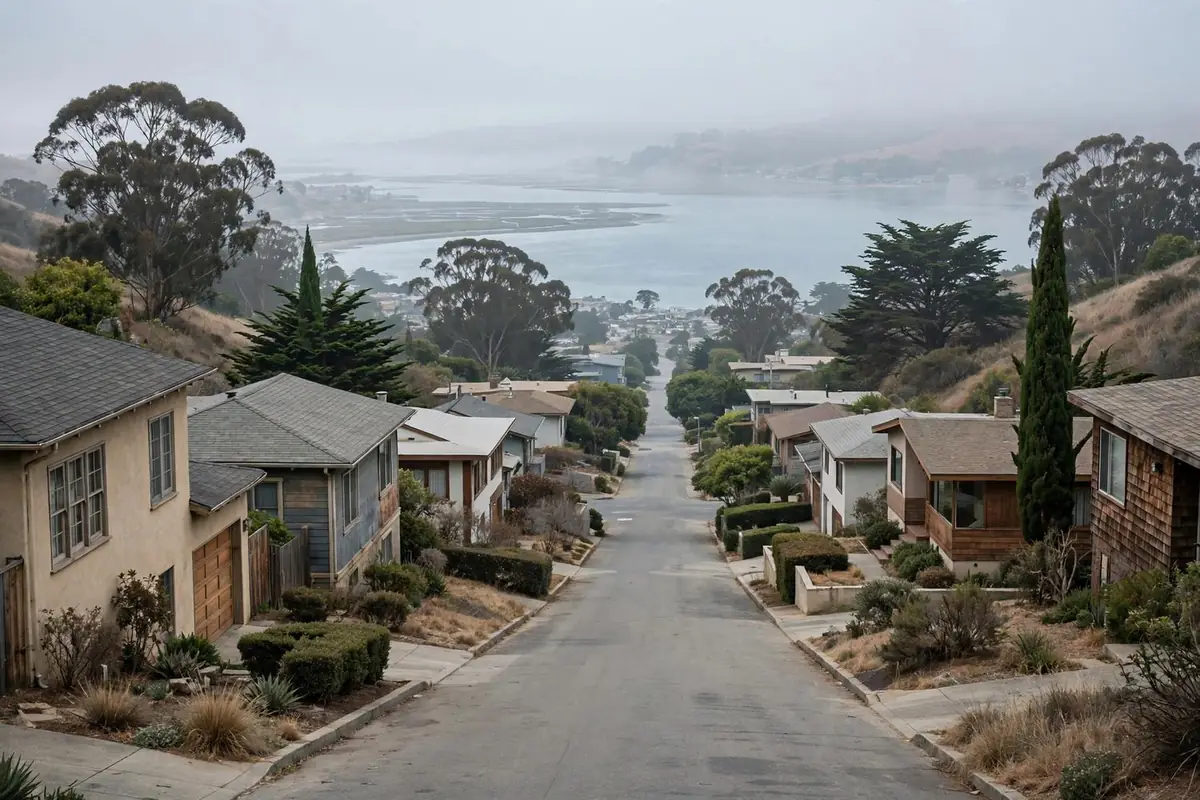
How old is the housing in Vallejo and Benicia?
Older than the rest of the county. Census data puts the median home in Vallejo at 1975, the earliest of any city in Solano County, and Benicia at 1981. Compare that with Fairfield (1986), Vacaville (1985) and Dixon (1988). A median means half the homes are older. In Vallejo that covers a lot of post-war neighborhoods, plus Mare Island's old Navy-era stock. In Benicia it includes the downtown grid and the area around the Arsenal Historic District, which is on the National Register of Historic Places (National Park Service).
Fuel use is typical for the county: about 60% of Vallejo homes and 67% of Benicia homes heat with utility gas, and most of the rest use electricity. Benicia also has the county's highest share of homes using wood as the main heat, about 2%. So you'll find gas furnaces in most of these houses, but the equipment, ducts and venting vary a lot from house to house.
What heating systems are common in pre-1980 homes?
| System | Where you'll find it | What to watch |
|---|---|---|
| Floor furnace | A grille in the hallway floor, no ducts | Hot grille, burn risk, old controls, often near end of life |
| Wall furnace | A panel in a hallway wall, sometimes two units | Venting, pilot problems, CO safety. See wall furnace repair or replace |
| Forced-air furnace | Hall closet, garage, crawlspace or attic | Original ducts, venting, return air size |
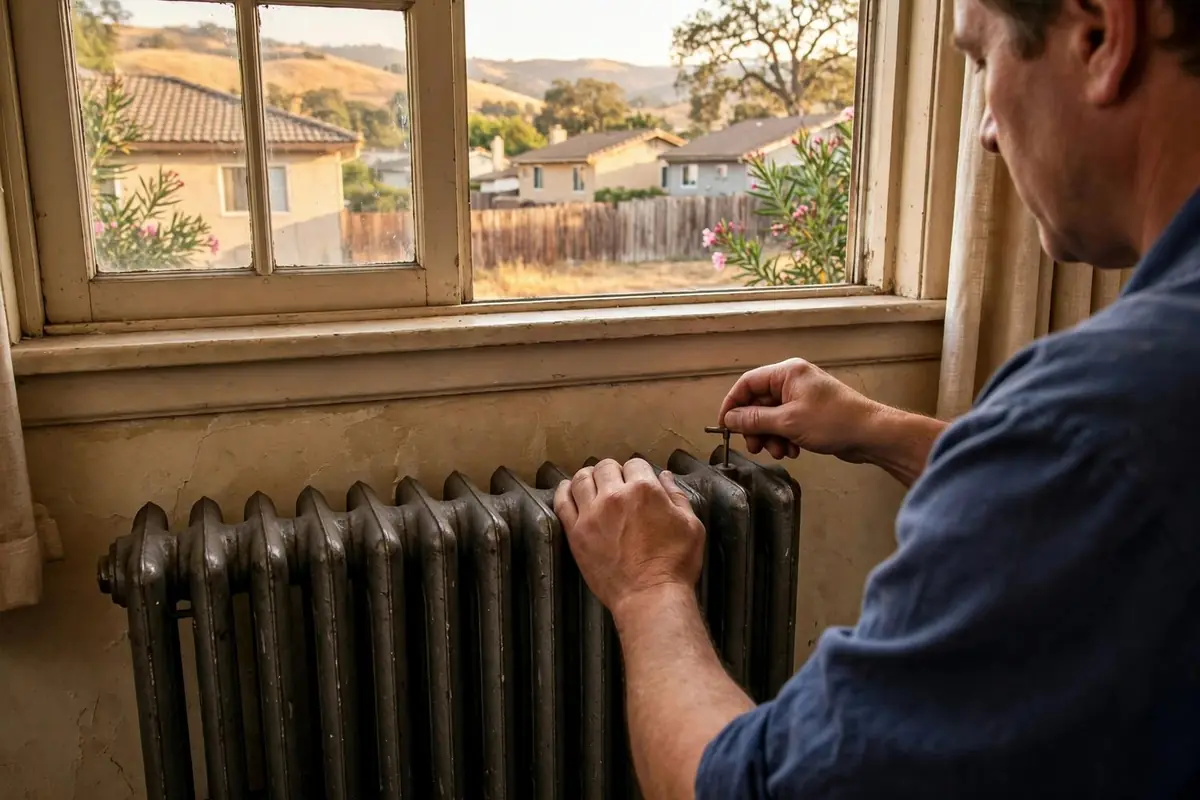
| Boiler and radiators | Basement or utility room, radiators or baseboard | Pressure, leaks, bleeding air. See boilers and radiators |
| Electric baseboard or wall heaters | Room by room | High operating cost, no cooling |
This post is about forced-air systems, the furnace-and-ducts setup most people picture. If your home has one of the others, the linked pages go deeper.
Ducts under the floor: the hidden half of the system
In many older one-story homes, the furnace sits in a hall closet or garage and the ducts run through the crawlspace under the floor. That's a good spot in some ways. It's cooler than an attic. But original crawlspace ducts tend to have three problems.
- Joints sealed with old cloth tape dry out and let go. Sometimes a run is just lying on the dirt, blowing heat into the crawlspace.
- The insulation is missing or has fallen off, so you lose heat before it reaches the room.
- Rodents chew flex duct, and a wet crawlspace rusts metal ducts.
The tell from inside: one or two rooms always colder, weak airflow at the far end of the house, or a dusty smell when the heat first comes on. For more on room-by-room problems, see why one room is always cold. If you have attic ducts instead, leaky attic ductwork covers that side.
Don't crawl under the house to fix ducts unless you're comfortable down there and know what you're touching, which brings up the next point.

A note on asbestos in older duct and pipe materials
Homes built before the 1980s can contain asbestos in some heating materials. The EPA mentions pipe, furnace and boiler insulation among the materials that may contain it (EPA asbestos guidance). The EPA's advice is simple: material in good shape is usually best left alone, and you shouldn't touch, cut or sand anything you suspect contains asbestos.
So if you see white or gray wrap on old ducts, a crumbling papery tape at the joints, or an old furnace with odd gasket material, don't pull it off to "check." Tell the HVAC company when you call. A good contractor will either work around it or tell you to get it tested and handled by an asbestos professional before ductwork is replaced. It's a normal part of working on older homes, and it's much cheaper to plan for than to discover halfway through a job.
Can you add central AC to an older heat-only home?
Often, yes. Plenty of older Vallejo and Benicia homes never had AC, and for good reason. NOAA normals put Vallejo's July average high at 85.4°F, with only about 7 days a year at 100°F or hotter. The marine air coming through the Carquinez Strait keeps much of the summer mild.
The trouble is the hot spells. During the September 2022 heat wave, Vallejo's NOAA station hit around 112°F. A few days like that are why people start asking about AC.
Adding cooling to a furnace that's already there usually means a coil on top of the furnace, an outdoor unit, refrigerant lines and a new thermostat. The catch is the ducts. Cooling needs more airflow than heating, so ducts sized decades ago for a small furnace may be too small or too leaky to cool the house well. A proper load calculation and a duct check should come before anyone picks a unit size. How to size an air conditioner explains why a Vallejo house rarely needs the same size AC as a Vacaville house of the same floor area.
One limit to know: RD Heat & Air connects calls for central systems. Ductless mini-splits are not covered by the line.
Venting and the water heater
Older gas furnaces usually vent through a metal flue, often into a masonry chimney or a shared vent with the water heater. Newer high-efficiency furnaces vent through plastic pipe instead, and they need a place to run it and to drain condensate.
When an old furnace that shared a vent is replaced with a high-efficiency one, the water heater can be left venting alone into a flue that was sized for two appliances. That can cause poor draft. It's a known issue, and a careful installer will check it and may need to change the water heater's vent. Ask about it on any quote for an older home. It's a safety question, not an upsell.
Any time an older gas appliance is involved, make sure you have working carbon monoxide alarms. California requires them in homes with fossil-fuel appliances, and CO alarms in California covers placement. If you ever smell gas, leave the house and call 9-1-1 and PG&E at 1-800-743-5000 from outside.

Thinking about a heat pump?
A heat pump heats and cools with one outdoor unit, and in a mild climate like Vallejo's it's worth a look. California's 2025 Energy Code makes heat pumps the baseline for new homes. Replacing equipment in an existing home follows the alteration rules, so you still have a choice.
The question in an older home is usually electrical. A heat pump, and especially any backup electric heat strips, needs circuits and panel capacity that a 1960s or 1970s panel may not have. Ask the HVAC company to check the panel during the estimate. If it needs an upgrade, that's an electrician's job and it affects your timeline. Heat pump vs gas furnace in Solano County goes through the trade-offs, and heat pump rebates in 2026 covers what incentive money is left. Vallejo and Benicia homes get default electric generation from MCE, with PG&E delivering the power and gas, so check both for current programs.
Permits and duct testing in an older home
Replacing a furnace, AC or heat pump needs a permit. Under California's Energy Code, changing the indoor or outdoor unit of a split system also triggers duct sealing and field verification by an ECC-Rater. The California Energy Commission says existing ducts should test at no more than 10% total leakage or 7% leakage to the outside under the 2025 code (CEC HVAC FAQ).
Old ducts often miss that on the first test. If sealing still can't get them there, the CEC allows the rater to verify by a smoke test and visual inspection instead. In practice, older homes sometimes end up with new ducts as part of a replacement, and the quote should say which way it's headed. Permits go through Vallejo's Central Permit Center at 555 Santa Clara Street or Benicia's Building Division. The Title 24 permits guide explains the steps.
Historic homes and where the outdoor unit goes
If you own a home in or near a historic district, such as the Arsenal area in Benicia or parts of old Vallejo and Mare Island, check with the city's planning or community development office before you settle on where a new outdoor unit sits. Some areas need approval for exterior changes that can be seen from the street. It's better to ask early than to move a condenser after it's set.
Inside, older homes often have plaster walls, small closets and tight crawlspaces. A good installer will plan duct routes that don't mean cutting up original trim and ceilings. Ask how they'll get ducts to each room before you sign anything.
What to have ready before you call
- The year the house was built, if you know it.
- Where the furnace is: closet, garage, crawlspace, attic or basement.
- Whether the ducts run under the floor or through the attic.
- Any rooms that never get enough heat.
- Whether you want to add cooling now or later.
- Photos of the furnace data plate and any wrap on old ducts or pipes.
- The age of your electrical panel, if a heat pump is on the table.
Then call (707) 418-4772. The line connects you with participating local HVAC companies that work on furnaces, central AC, heat pumps and boilers in Vallejo, Benicia and the rest of Solano County.
Sources
- U.S. Census Bureau, American Community Survey 2020–2024 5-year (tables B25003, B25035, B25040), via Census Reporter
- NOAA NCEI, U.S. Climate Normals 1991–2020 (station files for Vacaville, Nut Tree Airport, Fairfield, Vallejo)
- NOAA NCEI, Global Historical Climatology Network daily records
- California Energy Commission, Energy Code Support Center: HVAC FAQ
- MCE, Service area
Last reviewed 2026-11-12 by the RD Heat & Air editorial team. Editorial policy.