Fairfield AC failures, in order of how often they happen
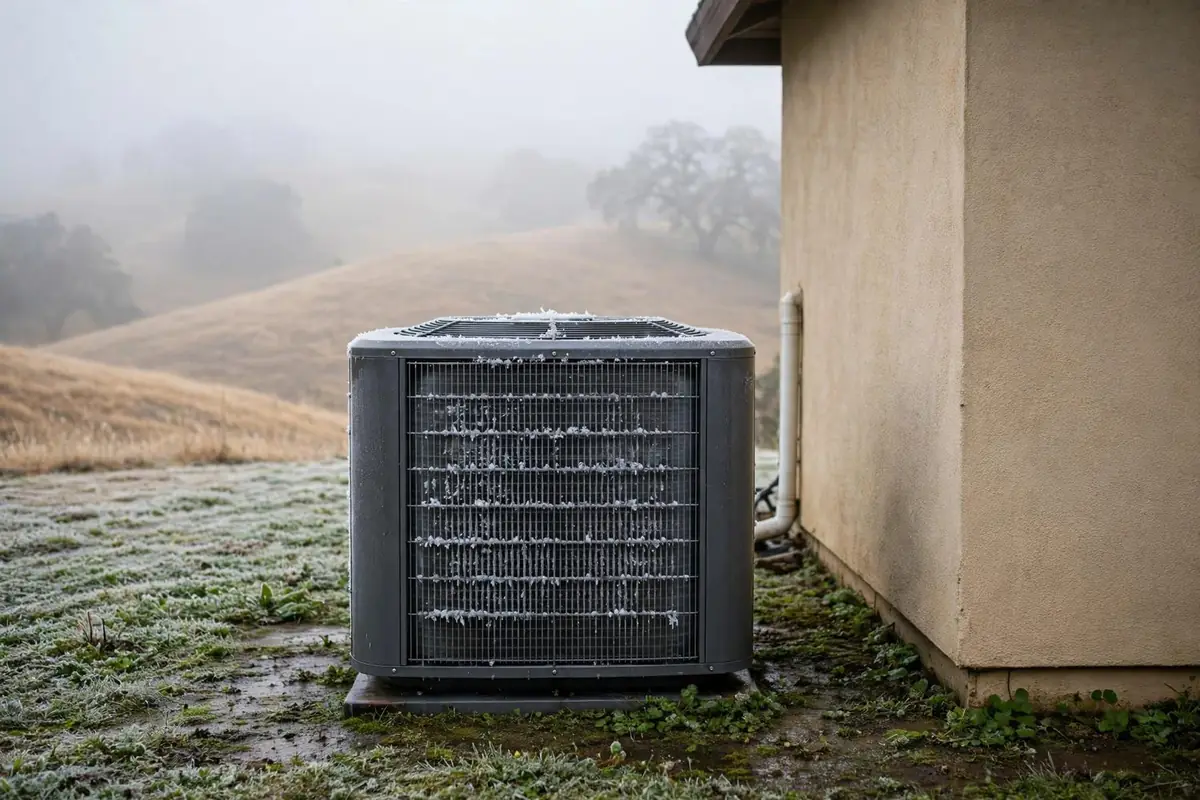
- Run capacitor after several 100°F days: the outdoor unit hums or the fan won't spin.
- Dirty filter or coil: weak airflow, long run times, ice on the line.
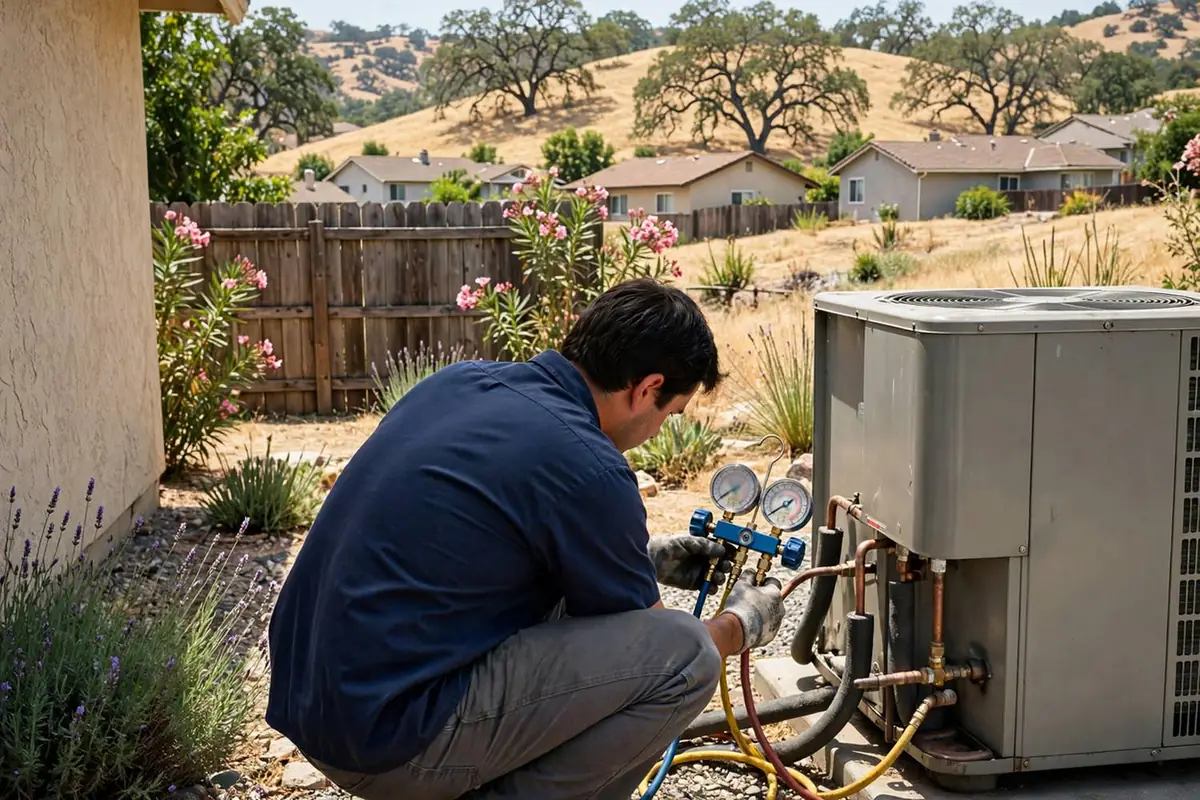
- Refrigerant leak: the system runs constantly but the air is only cool, not cold.
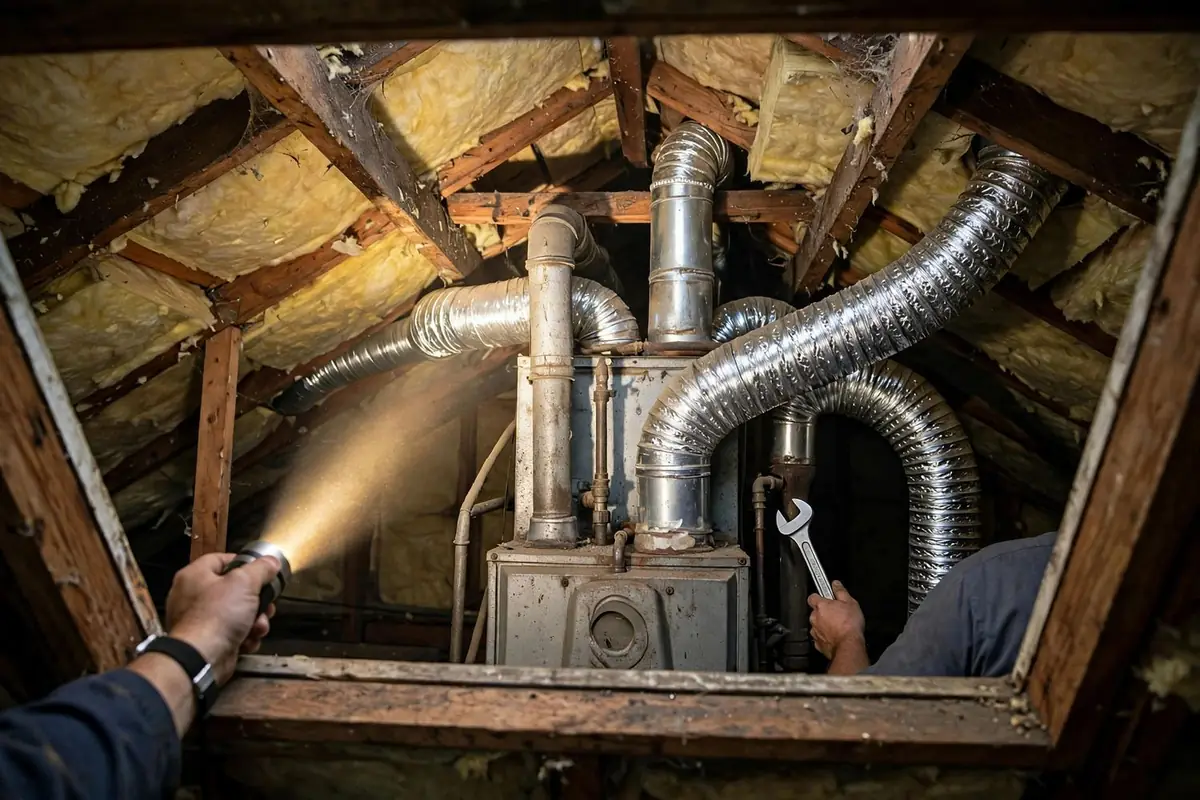
- Clogged condensate drain: water in the attic pan and the float switch shuts the AC off.
- Contactor or fan motor: the condenser stops mid-cycle.
Quick checks before calling
- Thermostat on Cool and Auto, set below room temperature.
- New filter if the old one is grey.
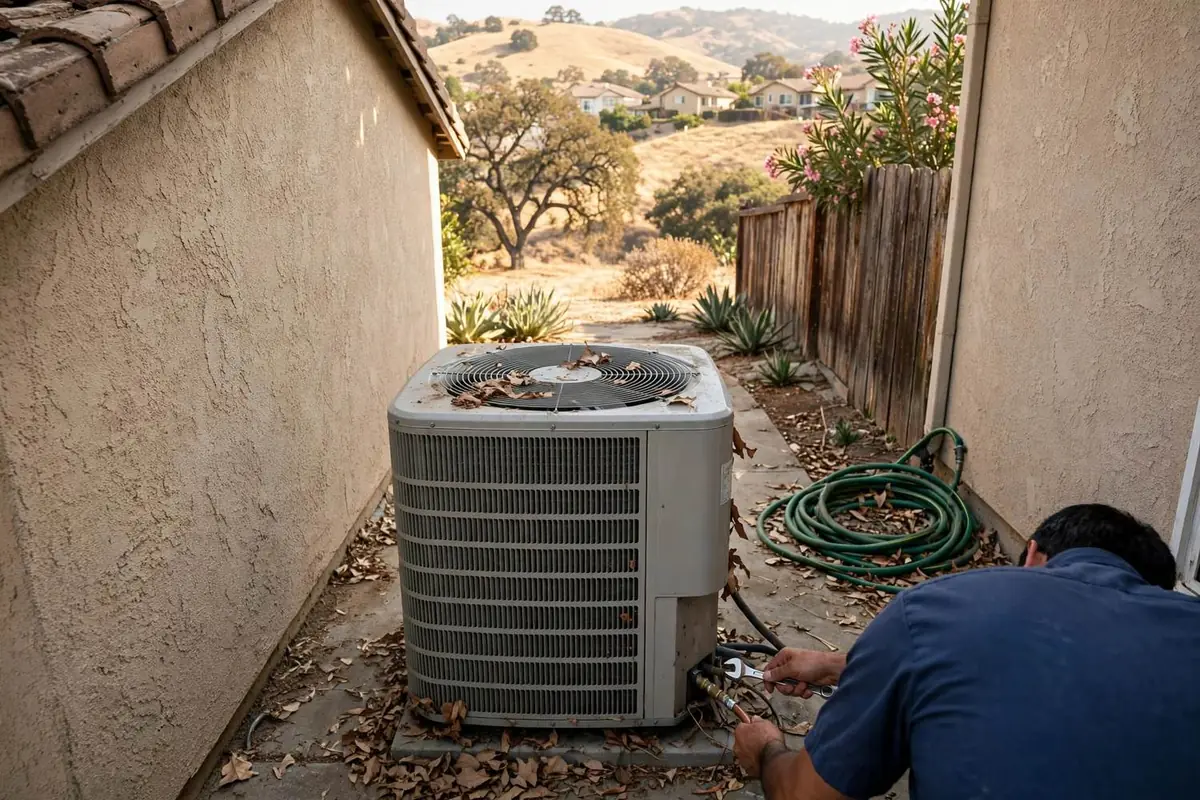
- Clear two feet around the condenser. Leaves and weeds from the side yard are common.
- Check the outdoor disconnect and the panel breaker. Reset once.
- Ice on the copper line: switch to Off with the fan On to thaw, and call.
The full checklist is on the AC repair guide.
Why Fairfield's heat is different
Fairfield's NOAA station averages 89.6°F in July with about 60 days a year at 90°F or hotter and 11 at 100°F or hotter. The Delta breeze usually cools evenings, which gives systems a break overnight. When the breeze fails during a heat wave, Fairfield systems run nearly as hard as Vacaville's. In September 2022 the Fairfield station recorded about 114°F. Those are the days capacitors and tired compressors fail, so a spring check is worth it.
Fairfield neighborhoods
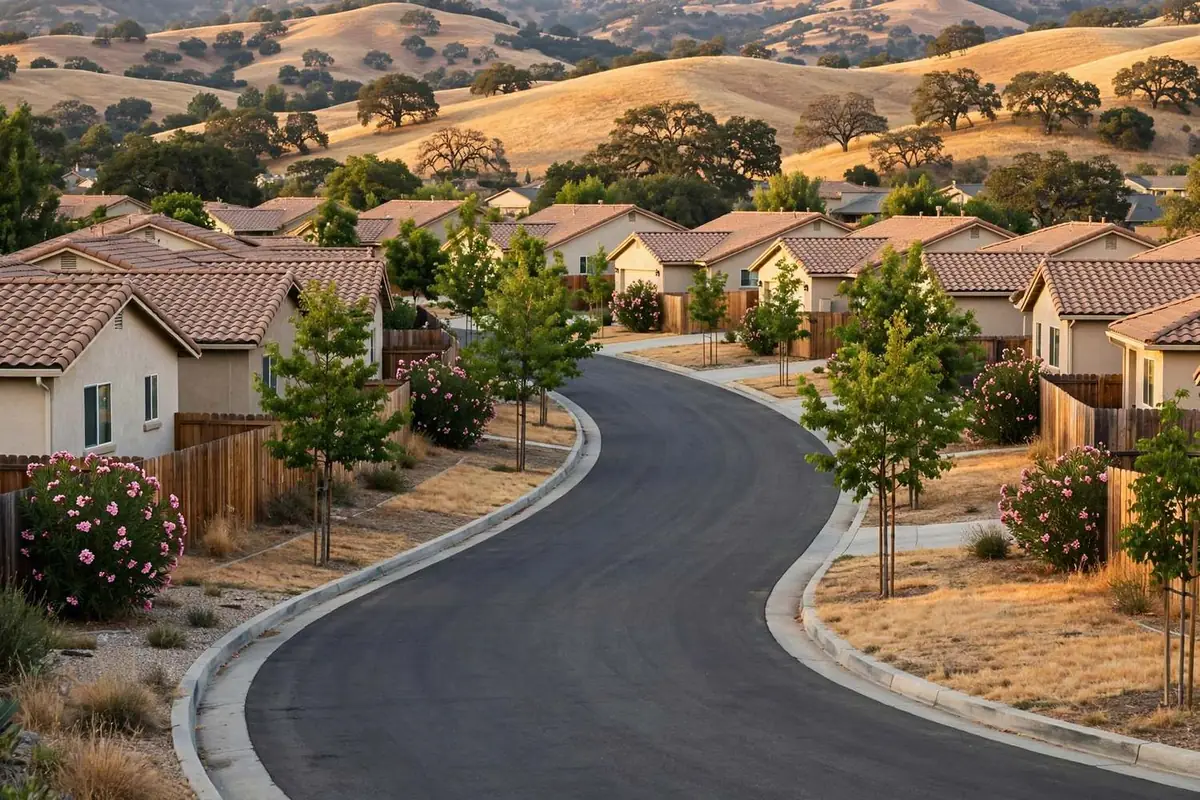
The line covers Fairfield ZIP codes 94533 and 94534, including Cordelia, Green Valley, Paradise Valley, Rancho Solano, central Fairfield and the east side toward Travis AFB. For general Fairfield heating and cooling information, see the Fairfield page.
Repair or replace in Fairfield
A 1980s-era Fairfield home may be on its second or third air conditioner. If yours is over 15 years old, uses R-22 refrigerant, or needs a compressor, ask for a replacement comparison. Replacements need a City of Fairfield permit and duct testing under the 2025 Energy Code. See replacement rules.
Fairfield AC symptoms: quick diagnosis table
| What you notice | Most likely cause | What to do now |
|---|---|---|
| Indoor fan blows, outdoor unit silent | Tripped breaker or disconnect, failed contactor, low-voltage wiring | Check the breaker and outdoor disconnect once; then call |
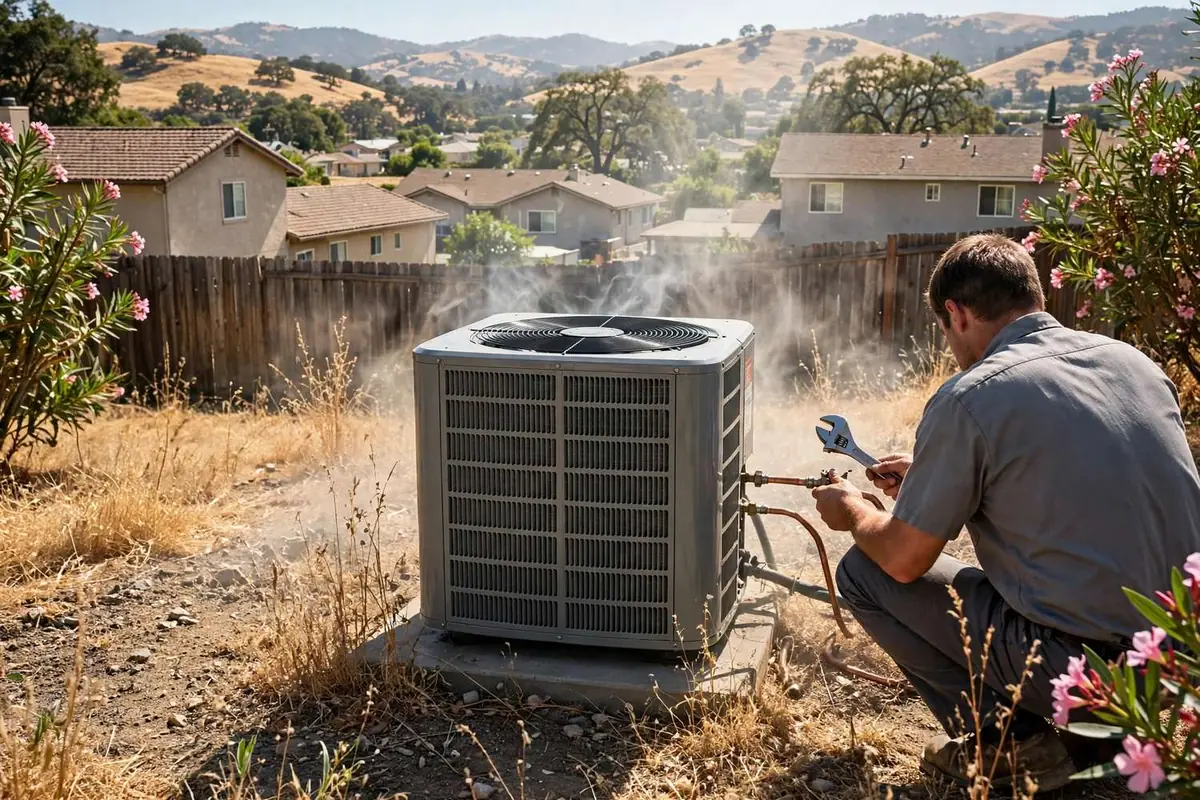
| Outdoor unit hums, fan doesn't spin | Run capacitor or fan motor | Turn the system off at the thermostat to protect the compressor; call |
| Air from vents is only cool, not cold | Dirty filter or coil, low refrigerant | Replace the filter; if no change after an hour, call |
| Ice on the copper line | Low airflow or low refrigerant | Set to Off with fan On to thaw; replace filter; call if it refreezes |
| Water in the attic pan or ceiling stain | Clogged condensate drain | Turn cooling off; call before the ceiling is damaged |
| Breaker trips when the AC starts | Failing compressor, capacitor or a short | Leave the breaker off; call |
General guidance; the technician's measurements decide the actual repair.
When the Delta breeze stops: Fairfield heat-wave pattern
Most summer days in Fairfield follow the same rhythm: a hot afternoon, then marine air pushing through the Carquinez Strait in the evening and cooling the house down overnight. The National Weather Service describes the Delta breeze as cool, moist air that moves inland from San Francisco Bay when inland pressure is low; the farther inland it travels, the weaker it gets.
During a heat wave that pattern breaks. High pressure parks over Northern California, the breeze fades, and Fairfield nights stay warm. That's when AC systems that coast through normal summers start failing: the condenser runs for 12 to 16 hours straight, the attic stays hot after dark, and weak parts give out. If your system struggled on the first hot weekend of the year, have it checked before the next heat wave.
Smoke season and your AC
Fairfield is in the Bay Area Air District. On smoke advisory days, keep windows and doors closed and run the system with a clean filter. If your furnace or air handler accepts a higher-efficiency pleated filter without restricting airflow, a smoke event is the time to use it. Change it after the smoke clears, because a loaded filter cuts airflow and can freeze the AC coil. Never run a whole-house fan or open windows to cool down during heavy smoke.
Keeping summer electric bills under control
In Fairfield, PG&E delivers electricity and MCE is the default generation provider. Both use time-of-use rates for most residential customers, where late-afternoon and evening hours cost more. Pre-cooling the house in the morning, then letting the thermostat rise a few degrees during peak hours, uses the cheaper hours and gives an older system a rest. A dirty outdoor coil or a slow refrigerant leak makes the condenser run longer for the same cooling, which shows up on the bill before the AC actually fails.
What to tell the dispatcher
The call goes faster when you have these ready:
- Your ZIP code (94533 or 94534).
- The system type: gas furnace, heat pump, boiler, or central AC, and roughly how old it is if you know.
- What it's doing in one sentence, for example "outside unit hums but the fan won't spin" or "furnace clicks, no flame".
- What you already checked (thermostat, breaker, filter).
- Whether anyone at home is vulnerable to heat or cold, so urgency is clear.
Ask the company you're connected with for its C-20 license number, when a technician can arrive, how the diagnostic visit is charged, and to put the repair price in writing before work starts.
Replacing an AC in Fairfield: what's different in 2026
If the repair doesn't make sense, a replacement in Fairfield needs a permit from the City's Building Safety Division. Under the 2025 California Energy Code, replacing the condenser alone still triggers duct sealing and third-party verification by an ECC-Rater, and AC systems in Climate Zone 12 need refrigerant charge verification. New systems use lower-GWP refrigerants after the 2025 federal change. Get two or three written quotes and confirm each includes the permit and testing. More detail on the replacement page.
Sources
- NOAA NCEI, U.S. Climate Normals 1991–2020 (station files for Vacaville, Nut Tree Airport, Fairfield, Vallejo)
- NOAA NCEI, Global Historical Climatology Network daily records
- National Weather Service, Technical Attachment 95-21: the Delta breeze
- U.S. Census Bureau, American Community Survey 2020–2024 5-year (tables B25003, B25035, B25040), via Census Reporter
- California Energy Commission, Energy Code Support Center: HVAC FAQ
Last reviewed 2026-11-12 by the RD Heat & Air editorial team. Editorial policy.