What is a time-of-use rate?
On a time-of-use (TOU) plan, the price of a kilowatt-hour changes with the clock. Power costs more when the whole state is using a lot of it and solar output is fading, and less the rest of the day. Most PG&E residential customers are now on a TOU plan, and the details for each plan are on PG&E's time-of-use page.
This post doesn't quote any rates. They change, and they depend on your plan, your baseline allowance and whether you get your power through PG&E or MCE. The structure is what helps you make decisions, so that's the focus here.
When are PG&E's peak hours?
It depends on the plan. Here's how the common residential TOU plans are structured, based on PG&E's plan descriptions:
| Plan | Peak window | Days | Who it tends to suit |
|---|---|---|---|
| E-TOU-C | 4 to 9 p.m. | Every day, weekends included | Most households; the standard TOU plan |
| E-TOU-D | 5 to 8 p.m. | Weekdays (most holidays excluded) | Homes that can avoid weekday evenings |
| E-ELEC (Electric Home) | 4 to 9 p.m., with partial-peak 3 to 4 p.m. and 9 p.m. to midnight | Every day | Homes with an EV, home battery or electric heat pump |
PG&E's summer season runs June through September and winter runs October through May. Summer peak pricing is where AC owners feel it most. Plan rules do change, so log into your PG&E account and check which schedule you're on before you change any habits.
Why does 4 to 9 p.m. hit Solano County so hard?
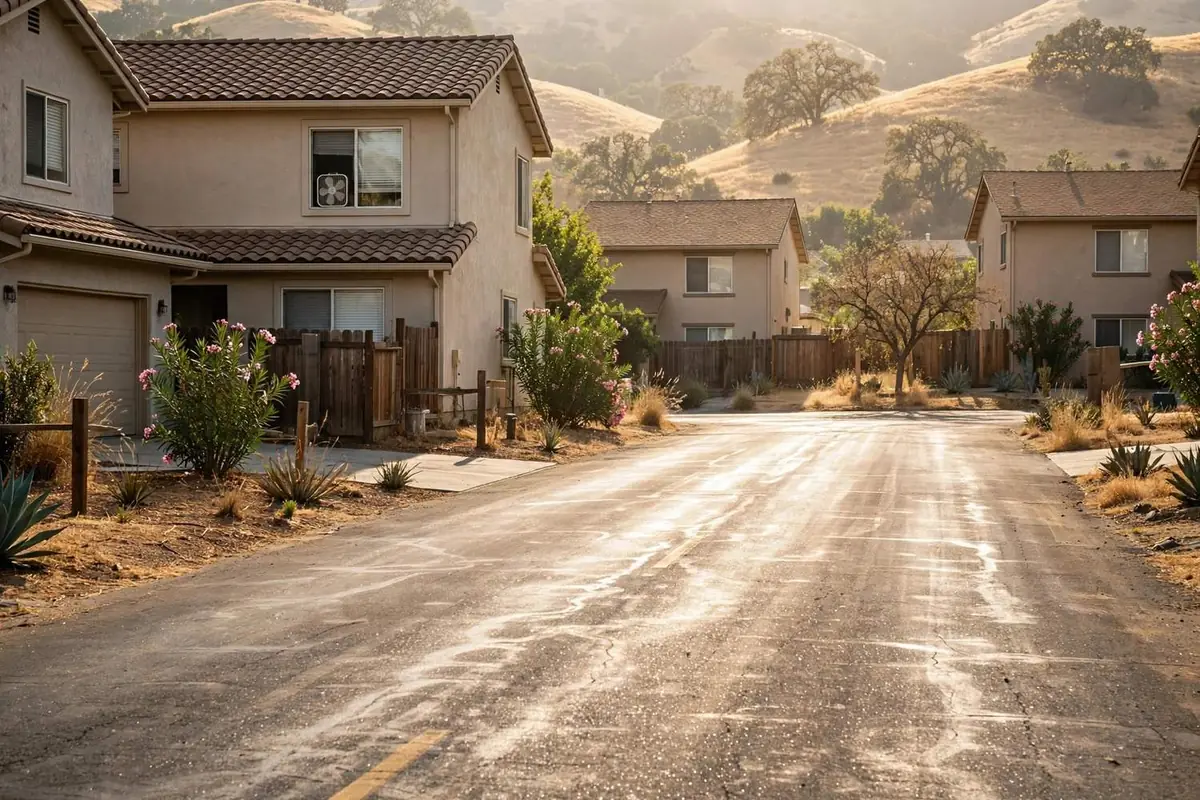
Because that's when inland houses are hottest. Downtown Vacaville averages a July high of 97.3°F and Fairfield 89.6°F (NOAA 1991-2020 normals). The outside temperature usually peaks in mid to late afternoon, but the house keeps soaking up heat through the walls, roof and attic for hours after that. On a lot of summer days your AC is working its hardest right as the price goes up.
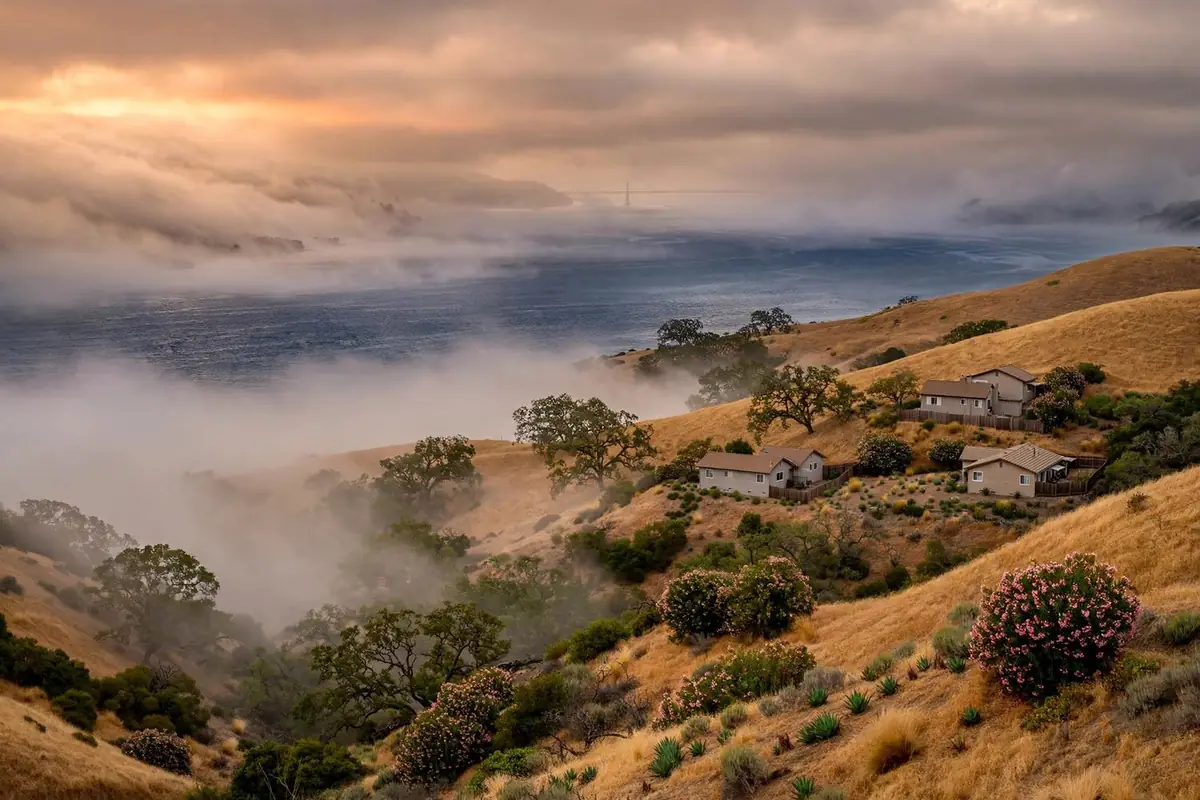
The Delta breeze helps, but timing is everything. When it shows up in the evening, Fairfield, Suisun City and Benicia can cool off enough to open windows sometime after sunset. Vacaville and Dixon, farther inland, often stay warm later. Vallejo, at 85.4°F in July, may barely need the AC on many days.
So the same plan can feel very different depending on which end of I-80 you live on.
How do you pre-cool a house before the peak?
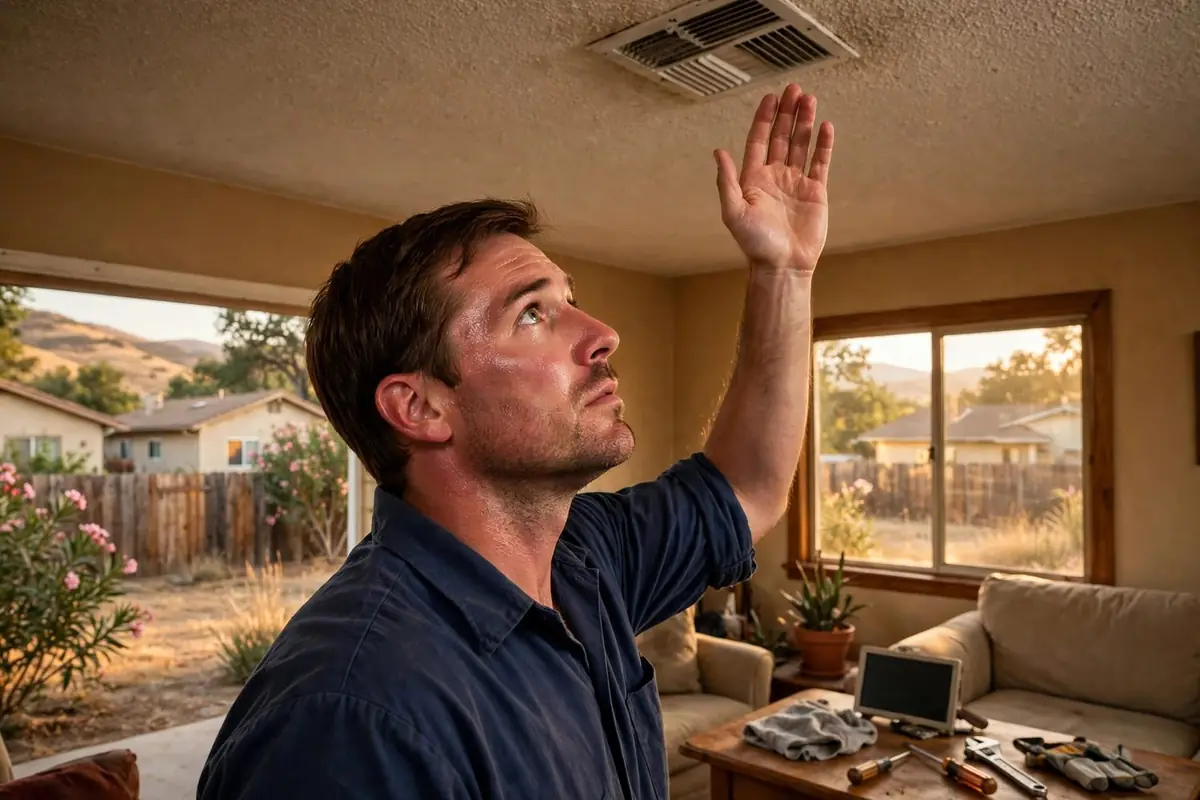
Pre-cooling means running the AC harder in early afternoon, while power costs less, so the house enters the peak window cooler. Then you let the temperature drift up slowly instead of fighting the heat at full blast from 4 to 9.
- Around early afternoon on a hot day, lower the thermostat a few degrees below your usual setting.
- At 4 p.m., raise it back to a setting you can live with, a little warmer than normal.
- Close blinds on west and south windows before the afternoon sun hits them.
- Run ceiling fans in rooms you're actually using. Fans cool people, not rooms, so turn them off when you leave.
- After 9 p.m. (or once the breeze arrives) go back to your normal setting, or open windows if it's cool enough outside.
Honestly, pre-cooling works better in some houses than others. A well-insulated 2000s home in east Fairfield holds the cool for hours. A 1970s Vallejo house with thin attic insulation and leaky ducts may lose it fast. Try it for a week and watch both your comfort and your usage chart in the PG&E app.
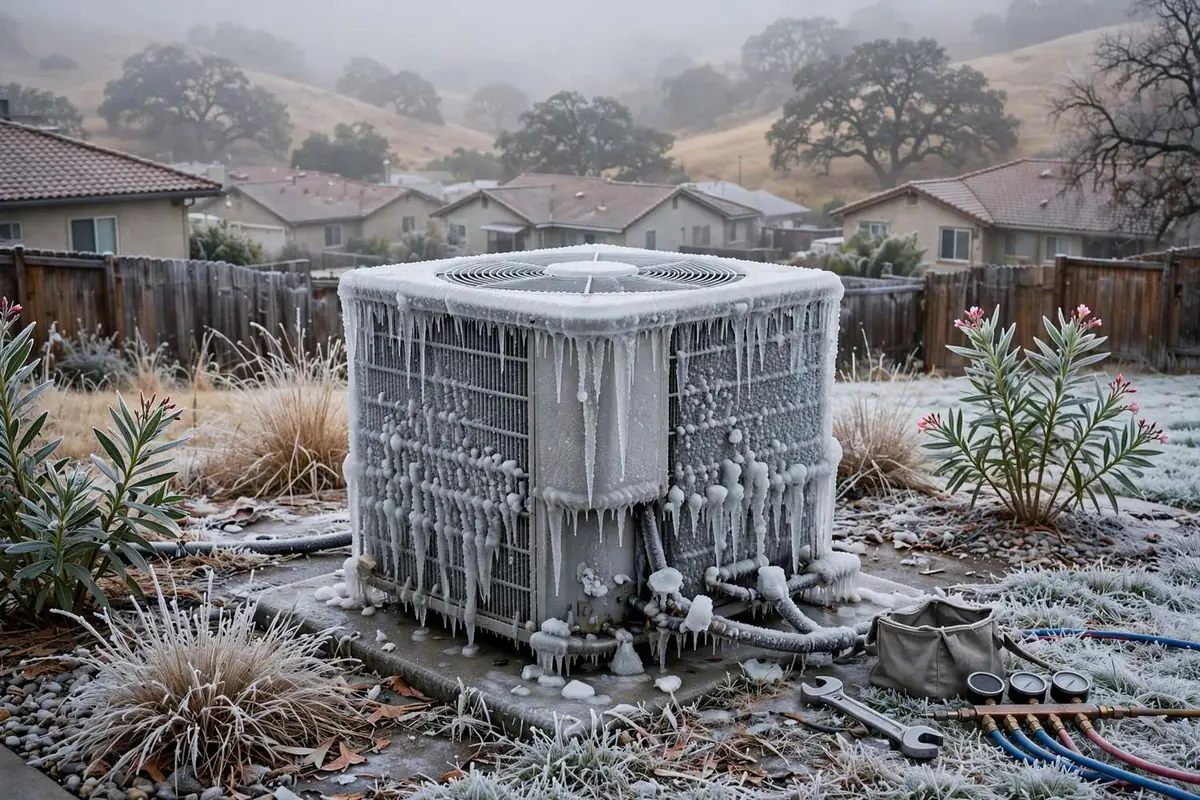
One caution. Don't drop the setting so low that the indoor coil starts icing up, and don't leave a dirty filter in while you do this. Long run times with poor airflow are a classic setup for a frozen AC.
Should you turn the AC off from 4 to 9 p.m.?
Usually no, not on a really hot day. If you shut it off at 4 p.m. in Vacaville in July, the house can heat up fast. Then at 9 p.m. the system has to run for hours to pull it back down, and it may not catch up before bedtime.
A better approach is a modest setback. Raise the thermostat a few degrees through the peak and let it coast. You save most of what you'd save by shutting it off, without a sweltering house.
There's a health side to this too. Older adults, babies and anyone with heart or lung problems shouldn't sit in a hot house to save on a bill. During a heat wave, comfort and safety come first. The heat wave AC plan covers what to do when the temperature passes 100°F.
What about heat pumps and winter TOU?
About a third of homes in these Solano cities heat with electricity, according to the Census Bureau's 2020-2024 American Community Survey. If yours has a heat pump, the same 4 to 9 p.m. window applies in winter.
The good news is that winter mornings, when heat pumps work hardest, fall outside the peak on the common plans. The bad news is that the early evening, when everyone gets home and the temperature drops, does fall inside it.
- Warm the house a degree or two in the hour before 4 p.m. on cold days.
- Avoid big setbacks with a heat pump. A deep setback can make the system call for backup electric heat to recover, which uses a lot more power. The aux and emergency heat explainer goes into this.
- Look at the Electric Home plan. PG&E says it's designed for homes that have electrified, including those with an electric heat pump, and that a permanently installed electric heat source used as the primary heat may qualify for additional baseline allowance. Details are on PG&E's Electric Home plan page.
If you heat with a gas furnace, your gas usage isn't on a time-of-use schedule the same way, though the furnace blower still uses electricity.
Which household habits matter most on TOU?
For most Solano homes, the AC is the biggest summer load. But a few other things stack up in the evening:
- Running the dishwasher, washer and dryer after 9 p.m. or before 4 p.m.
- Scheduling EV charging overnight.
- Keeping the oven off on hot evenings. It heats the house and makes the AC run harder.
- Pool pumps set to run during the day or late at night.
These moves cut peak usage without touching your comfort, which makes them easier to stick with than thermostat tricks.
Does a smart thermostat help with TOU?
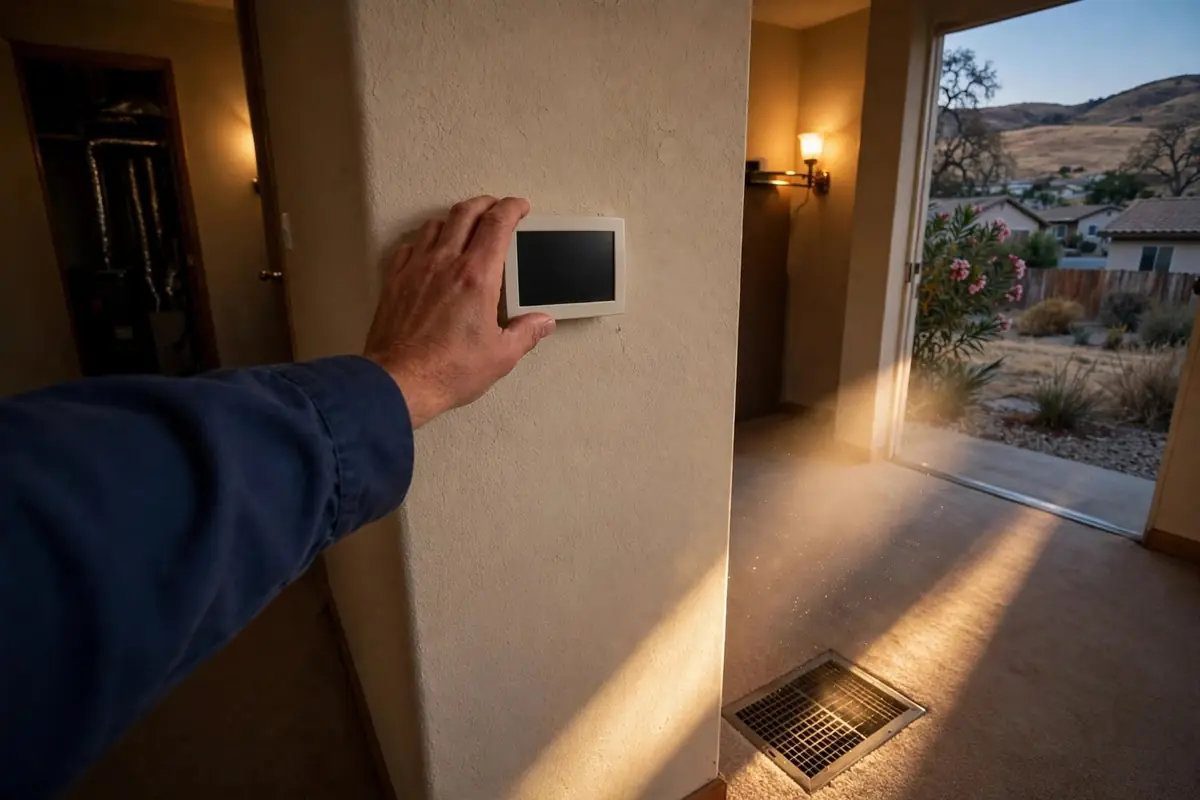
It can, mostly because it does the remembering for you. Many smart thermostats let you build a schedule around 4 to 9 p.m., and some can pre-cool automatically. They can also show how long your system ran each day, which is a good early warning: if run time climbs while the weather stays the same, something is wrong.
Setup matters, especially with heat pumps. See smart thermostats with heat pumps and furnaces before you buy one.
When a high bill is really an HVAC problem
TOU can make a struggling AC look like a rate problem. If your bill jumped and your habits didn't change, rule out the equipment:
- The AC runs nonstop in the afternoon and never reaches the setting.
- The air from the vents doesn't feel much colder than the room.
- The outdoor unit hums but the fan doesn't spin.
- One part of the house stays hot while the rest is fine, which often points to leaky attic ducts.
- The filter is gray or the outdoor coil is packed with dust and grass.
Change the filter and clear debris from the outdoor unit first. If it's still struggling, see AC not cooling or call (707) 418-4772 to reach a participating local HVAC company. A system that runs shorter and cools better saves money on any rate plan.
Sources
- NOAA NCEI, U.S. Climate Normals 1991–2020 (station files for Vacaville, Nut Tree Airport, Fairfield, Vallejo)
- U.S. Census Bureau, American Community Survey 2020–2024 5-year (tables B25003, B25035, B25040), via Census Reporter
- National Weather Service, Technical Attachment 95-21: the Delta breeze
- MCE, Service area
Last reviewed 2026-11-12 by the RD Heat & Air editorial team. Editorial policy.