What is an HVAC maintenance plan?
It's a service agreement between you and one heating and air company. You pay for a year (or sign up for monthly billing), and in return the company comes out on a schedule to inspect and clean your system. Most plans in Solano County are built around two visits: cooling in spring before the heat, heating in fall before the first cold mornings.
Plans go by a lot of names. Comfort club, service agreement, protection plan, membership. The name tells you nothing. The task list and the terms tell you everything.
A maintenance plan is not the same as a warranty or a home warranty. A manufacturer's warranty covers parts that fail from defects. A home warranty is an insurance-like product from a third party. A maintenance plan is mostly labor for prevention. The differences are covered in the HVAC warranty guide.
What should a real maintenance visit include?
This is where plans differ the most. A good visit takes real time with tools and meters. A weak one is a filter swap and a sticker. Compare any plan against this checklist. It lines up with the kind of tasks ENERGY STAR's maintenance checklist recommends.
Cooling visit (spring)
- Check thermostat settings and operation
- Inspect and clean the outdoor coil
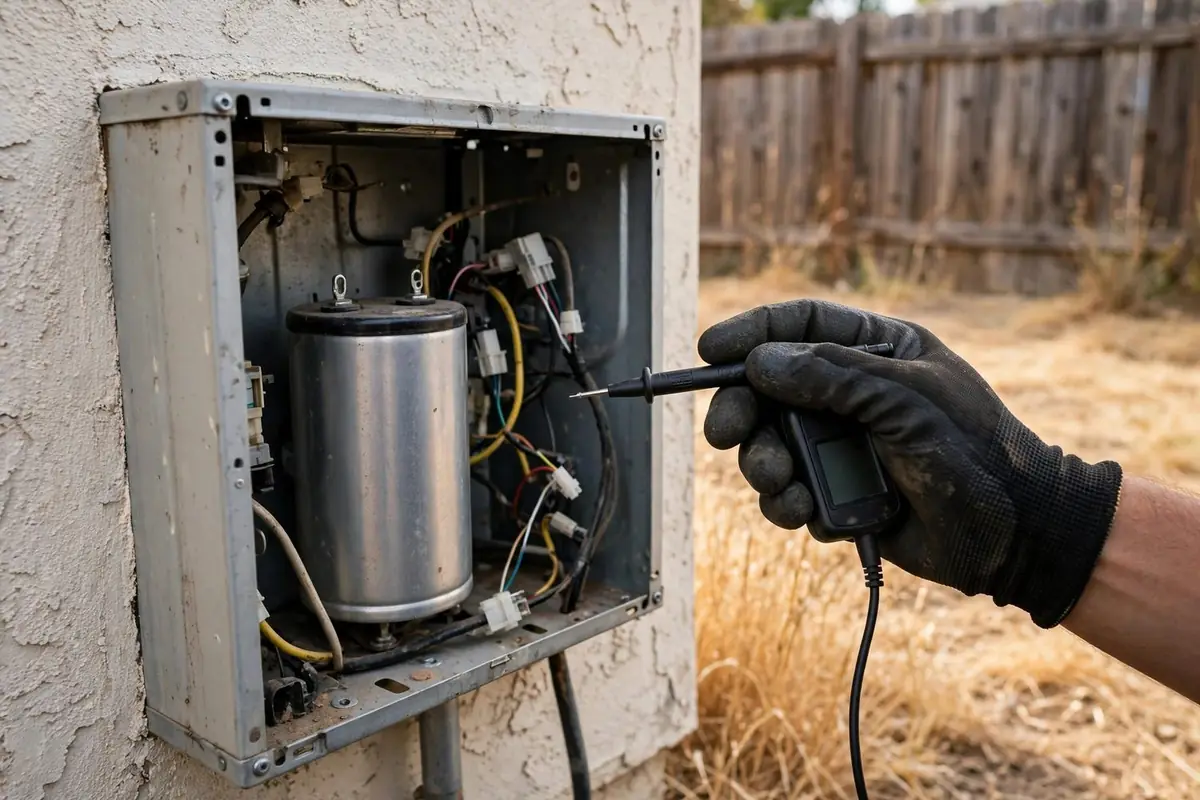
- Check the capacitor and electrical connections, and measure motor amp draw
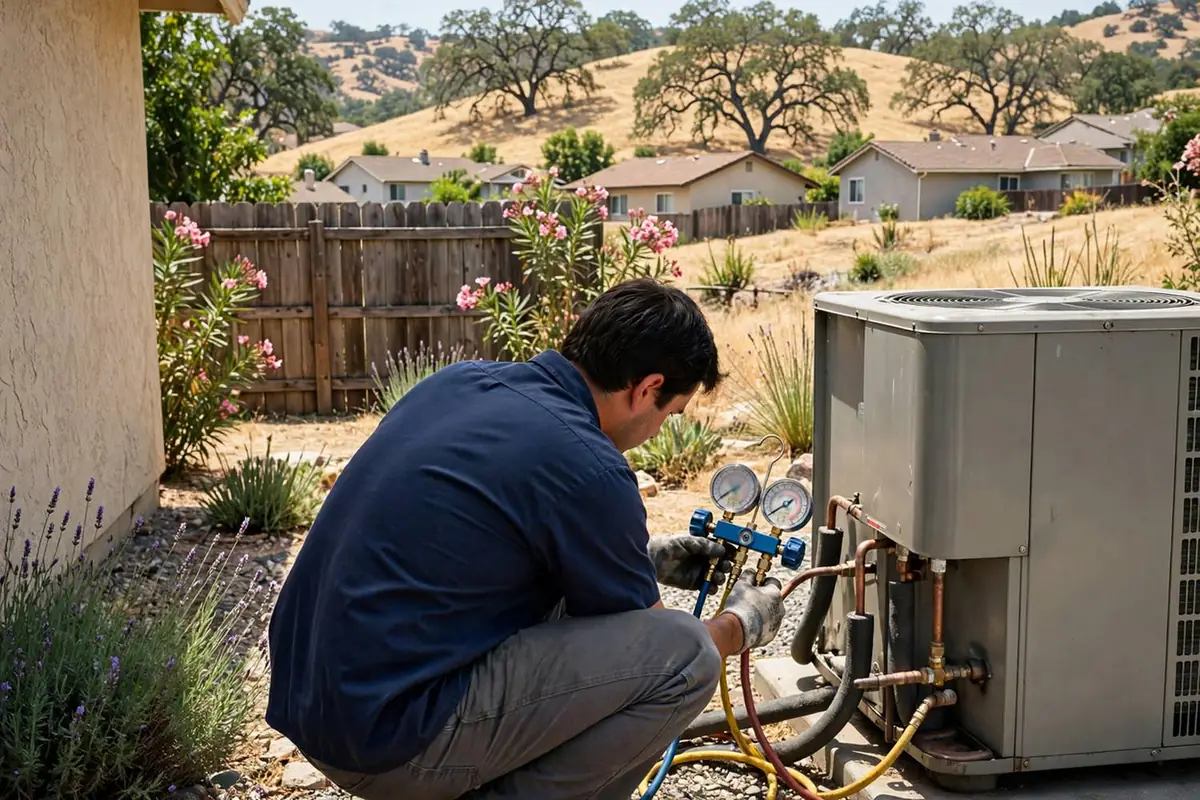
- Check refrigerant pressures and temperatures against the manufacturer's specs
- Inspect the indoor coil if accessible, and clear the condensate drain
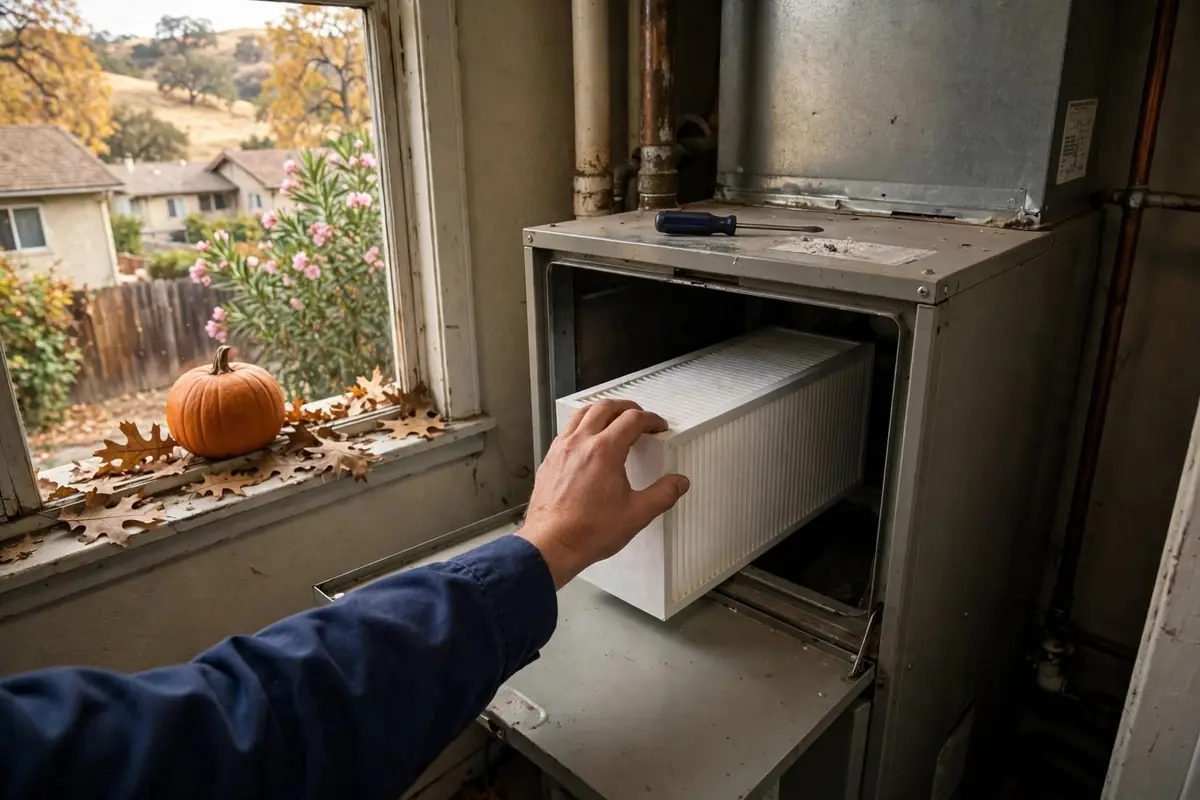
- Check the blower and airflow, and replace or check the filter
- Measure the temperature drop across the indoor coil
Heating visit (fall)
- Inspect the burners, igniter and flame sensor on gas furnaces
- Check the venting and look for signs of cracks or rust in the heat exchanger area
- Test the safety switches and limit controls
- Check gas pressure and test for carbon monoxide
- On heat pumps, check the defrost cycle, reversing valve and backup heat
- Check the blower, filter and thermostat
Ask for a written report after each visit with readings, not just "system OK." For a deeper look at the spring visit, see the AC tune-up checklist.
What else do plans usually include?
Beyond the visits, most plans offer some mix of perks. Read each one closely, because the wording does a lot of work.
| Perk | What to ask |
|---|---|
| Priority scheduling | Priority over whom, and is there any stated time window? In a heat wave every company is slammed. |
| Repair discount | A discount off what? Their standard price list, or a quote you can compare? |
| Waived or reduced service-call fee | Does it apply after hours and on weekends, or only during business hours? |
| Extended labor coverage | Which parts, for how long, and does it end if you skip a visit? |
| Filters included | Which size and MERV rating? A thin filter may not suit smoke season. |
| Transferable to a buyer | Useful if you plan to sell. Check whether there's a fee or a form. |
None of these is bad. They just aren't worth much unless you know exactly what they mean.

Is a maintenance plan worth it in Solano County?
For a lot of homes, yes, but not for the reasons the brochures give. The real value is that someone looks at your system before the season it has to work hardest.
Inland Solano summers are tough on air conditioners. NOAA normals put downtown Vacaville at about 28 days a year at 100°F or hotter, and Fairfield at about 11. Capacitors, fan motors and dirty coils tend to fail on exactly those afternoons. A spring visit is your best shot at catching a weak part in April instead of at 5 p.m. in July. The heat wave AC plan explains what to do if one fails anyway.
Age matters too. The median home in these cities was built between 1975 (Vallejo) and 1988 (Dixon), according to the Census Bureau's American Community Survey. Plenty of those houses still have original ducts, and many have furnaces or ACs well past their middle years. Older equipment gives more warning signs, and a technician who sees it every year will notice changes.
And about six in ten homes in these cities heat with natural gas. A yearly fall look at burners, venting and safety controls is reasonable for any gas furnace, and the furnace fall checklist covers what you can check yourself in between.
When does a plan not make sense?
Honestly, a plan can be a poor fit in some cases:
- You're about to replace the system. New equipment needs less attention in year one, and the installer may include a first checkup.
- You rent. In most rentals, HVAC upkeep is the landlord's job. Check your lease before paying for anything. This comes up a lot with Travis AFB families renting off base; the Travis AFB tips page has more.
- You'd only use the visits and not the perks, and you're disciplined enough to book a one-off tune-up each year yourself. Then it's worth comparing a single visit against the plan.
- The plan locks you into one company you haven't vetted yet.
A plan is a relationship with a single company. If you don't trust their work, a discount won't fix that. Start with how to choose an HVAC company and check the license with the CSLB license lookup. HVAC work falls under the C-20 license class.
What fine print should you read before signing?
Ask for the agreement in writing and read it at the kitchen table, not on a tablet in the driveway. Look for these points:
- Term and renewal. Does it renew automatically? How do you cancel? California's automatic renewal law requires businesses to disclose renewal terms clearly and give you a straightforward way to cancel.
- Billing. Annual up front or monthly? What happens if a payment fails?
- Visit scheduling. Do they call you, or do you have to book? Unbooked visits often just expire.
- What counts as "maintenance." Is coil cleaning included or extra? Is a drain line flush included?
- Equipment covered. One system or all of them? Two-story homes often have two.
- Exclusions. Refrigerant, parts and after-hours labor are usually extra.
- Upsell pressure. Does the plan say anything about recommending replacements or add-ons?
One more practical note. If a technician on a plan visit says your system needs a major repair or replacement, you can always get a second opinion. That's normal, and good companies expect it.
Do manufacturers require maintenance for warranty?
Many manufacturer warranties say the equipment has to be installed and maintained properly, and some list maintenance as something they can look at when a claim comes in. The exact wording varies by brand and model, so pull up your own warranty document rather than relying on what a salesperson says.
Keeping receipts or visit reports in a folder costs nothing and can help if a part fails. A plan with written reports makes that easy, but a one-off visit with a receipt does the same job.
What can you do yourself between visits?
A plan doesn't replace the simple stuff. These are safe homeowner tasks:
- Check the filter every month in summer and during smoke events; replace it when it looks gray.
- Keep two feet of clear space around the outdoor unit. Pull weeds, leaves and dry grass.
- Pour a cup of water into the condensate drain access (if your system has one) in spring to see that it drains.
- Test smoke and carbon monoxide alarms when the clocks change.
- Watch for changes: new noises, short cycling, a higher PG&E bill with the same habits.
Never open the burner compartment, touch the capacitor or try to add refrigerant. Those are technician jobs, and a capacitor can hold a dangerous charge even with the power off.
How to compare two plans quickly
Lay the two agreements side by side and answer five questions: How many visits, and what's on the checklist? What does each perk actually mean in writing? How do you cancel? Which equipment is covered? Will you get a written report?
The plan that answers those clearly is usually the better company, regardless of the price. If your system is already acting up, skip the plan shopping for now and get it looked at. Call (707) 418-4772 to be connected with a participating local HVAC company. Plan terms and pricing are set by the company, not by RD Heat & Air.
Sources
- NOAA NCEI, U.S. Climate Normals 1991–2020 (station files for Vacaville, Nut Tree Airport, Fairfield, Vallejo)
- U.S. Census Bureau, American Community Survey 2020–2024 5-year (tables B25003, B25035, B25040), via Census Reporter
- Contractors State License Board, C-20 Warm-Air Heating, Ventilating and Air-Conditioning classification
- Contractors State License Board, Check a License
- FTC consumer advice: hiring a contractor
Last reviewed 2026-11-12 by the RD Heat & Air editorial team. Editorial policy.