How hot Dixon gets
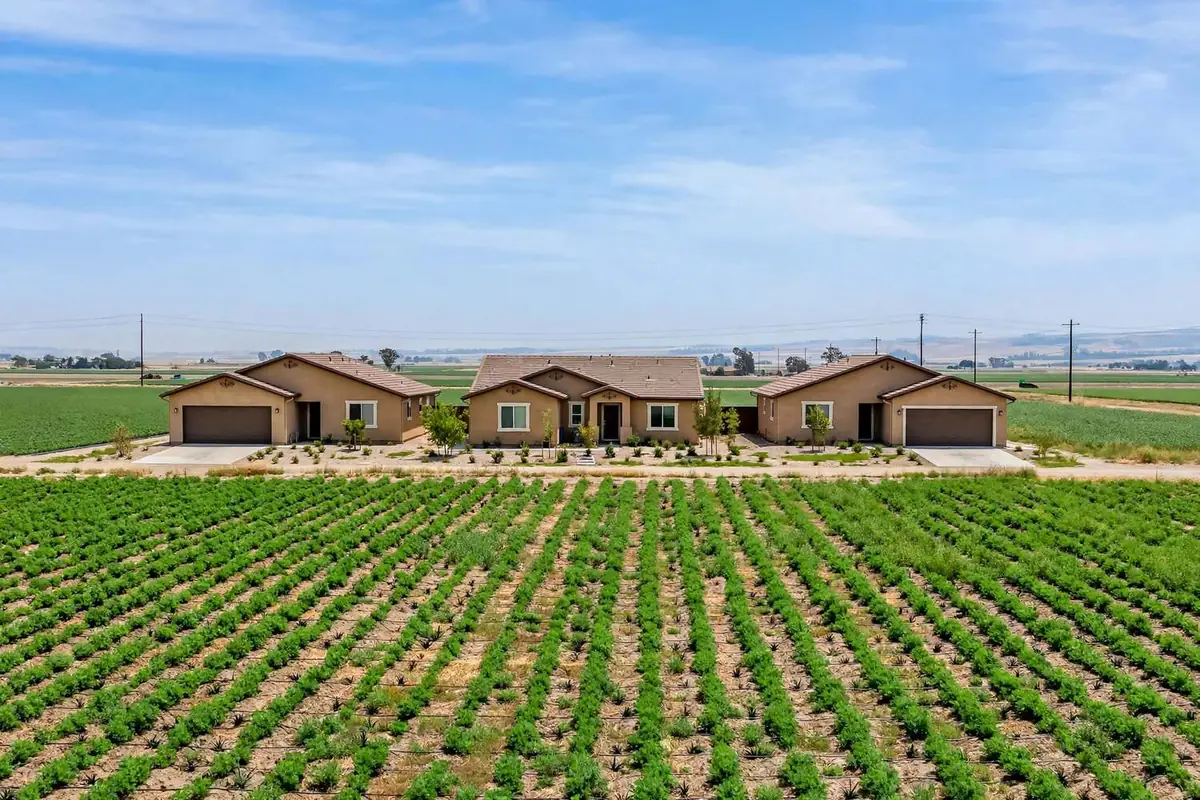
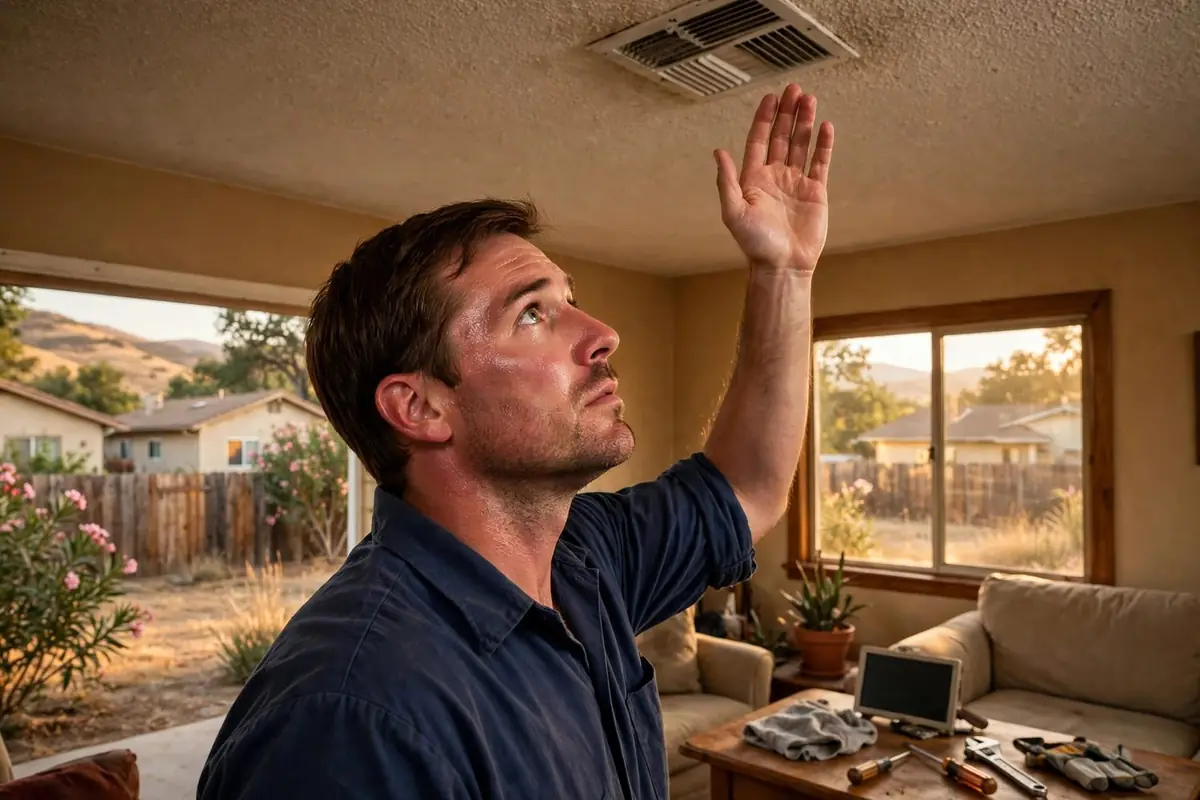
Dixon has no NOAA normals station. The closest references are Vacaville's stations, with July average highs of 95–97°F and roughly 22–28 days a year at 100°F or hotter. Dixon sits farther out on the Sacramento Valley floor, east of where the Delta breeze runs out, so evenings cool off less than in Fairfield. Air conditioners here run long, hot cycles from June into September.
Field dust and dirty coils
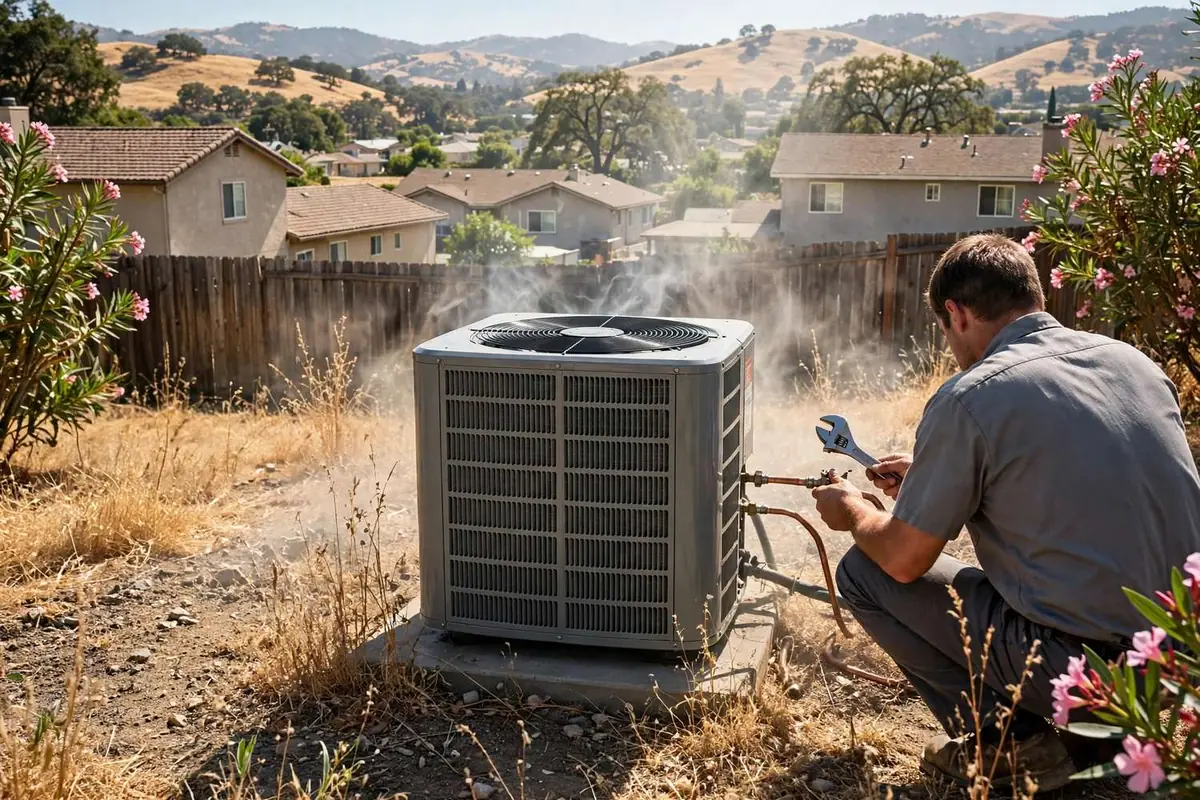
Farmland surrounds Dixon. Harvest, plowing and windy days load the outdoor coil with dust and chaff, and a dirty coil can't shed heat. The result is high pressure, long run times, a hot compressor and, eventually, a tripped breaker or failed capacitor. Rinsing the coil gently from the inside out with a garden hose, power off, in spring and again mid-summer prevents a lot of Dixon AC calls. Change the indoor filter more often during harvest season too.
Most common Dixon AC failures
- Run capacitor after a stretch of triple-digit days: the outdoor unit hums or the fan won't spin.
- Dirty condenser coil: runs constantly, can't keep up in the afternoon.
- Contactor pitted or stuck: the unit won't start or won't shut off.
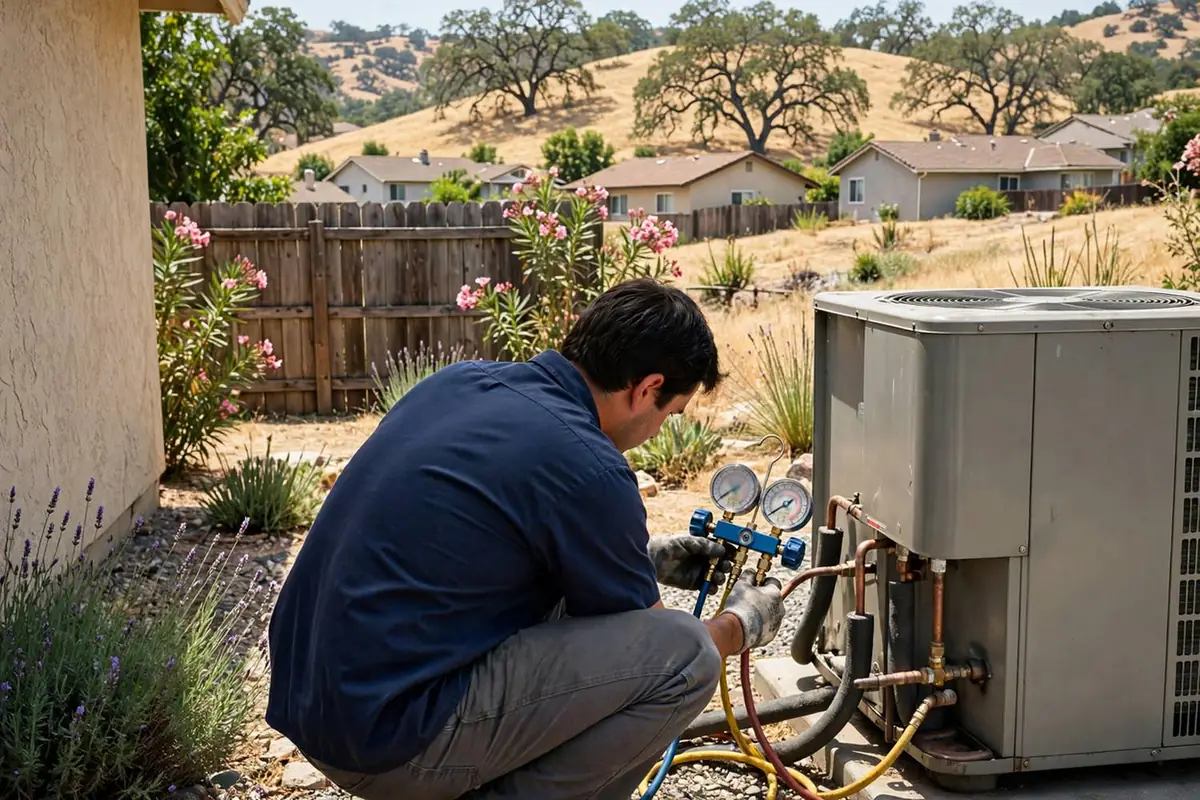
- Refrigerant leak: the air is cool, not cold, and the line may ice.
- Clogged condensate drain: water in the pan and the float switch shuts the system down.
Quick checks before calling
- Thermostat on Cool and Auto, set below room temperature.
- New filter if the old one is grey.
- Clear two feet around the outdoor unit.
- Check the outdoor disconnect and the panel breaker. Reset once only.
- Ice on the copper line: switch to Off with the fan On to thaw, then call.
More steps in the AC repair guide.
Newer homes, heat pumps and replacements
Dixon's housing is the newest of the Solano towns covered here, with a median build year of 1988, and about 27% of homes heat with electricity, many with heat pumps. A heat pump that won't cool has the same failure points as an AC. When a system is replaced, the City of Dixon issues the permit, and California's 2025 Energy Code requires duct sealing and verification. See replacement rules.
Smoke and air quality
Dixon is in the Yolo-Solano Air Quality Management District. During wildfire smoke, keep windows closed, run the system with a clean, well-fitting filter, and replace the filter once the smoke clears.
What to tell the dispatcher
- Your ZIP code (95620).
- System type: gas furnace, wall furnace, heat pump, boiler or central AC.
- What it's doing, in one sentence.
- What you already checked.
- Whether anyone at home is vulnerable to heat or cold.
Ask the company for its C-20 license number, arrival time, how the diagnostic visit is charged, and a written price before work starts.
Sources
- NOAA NCEI, U.S. Climate Normals 1991–2020 (station files for Vacaville, Nut Tree Airport, Fairfield, Vallejo)
- U.S. Census Bureau, American Community Survey 2020–2024 5-year (tables B25003, B25035, B25040), via Census Reporter
- California Air Resources Board, Yolo-Solano AQMD
- California Energy Commission, Energy Code Support Center: HVAC FAQ
Last reviewed 2026-11-12 by the RD Heat & Air editorial team. Editorial policy.